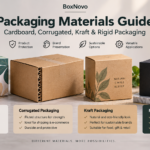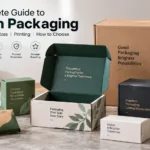
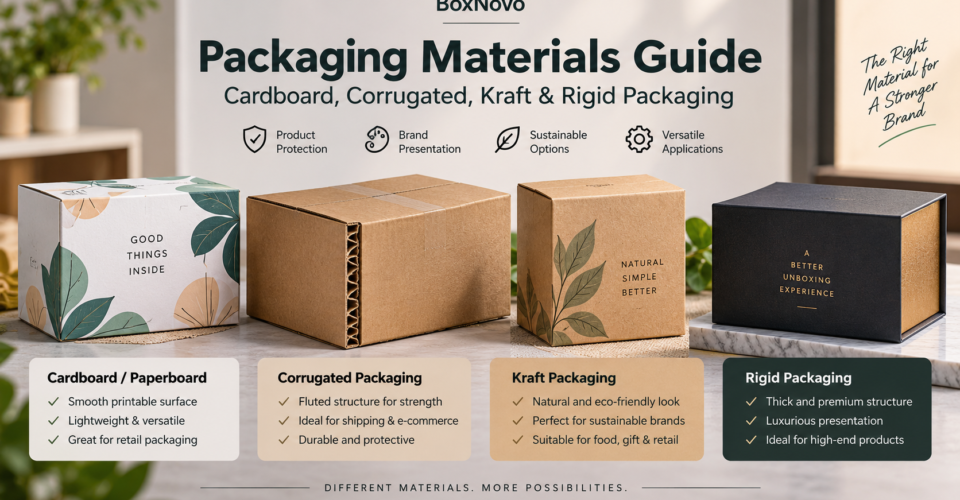
Choosing the right packaging materials affects much more than how a box looks. The material influences product protection, print quality, structural performance, presentation, shipping requirements, and the overall customer experience. The most common packaging materials include cardboard or paperboard, corrugated board, kraft-based packaging, and rigid board. Each has different characteristics, so the right choice depends on the product, required protection, packaging style, printing needs, budget, and intended use. This guide compares the main packaging material types and explains how to choose the right material for custom boxes and product packaging.
What Are Packaging Materials?
Packaging materials are the physical materials used to make containers, boxes, wraps, inserts, protective structures, and other packaging components. Common materials include paperboard, cardboard, corrugated board, kraft paperboard, and rigid board.
The material selected for a package affects several practical factors, including:
- Product protection and structural strength
- Weight and handling
- Printing and branding quality
- Surface appearance and texture
- Box construction and available styles
- Shipping and storage requirements
- Product presentation and unboxing experience
There is no single best packaging material for every product. The correct material is the one that provides the required balance of protection, appearance, functionality, production requirements, and cost.
What Are the Main Types of Packaging Materials?
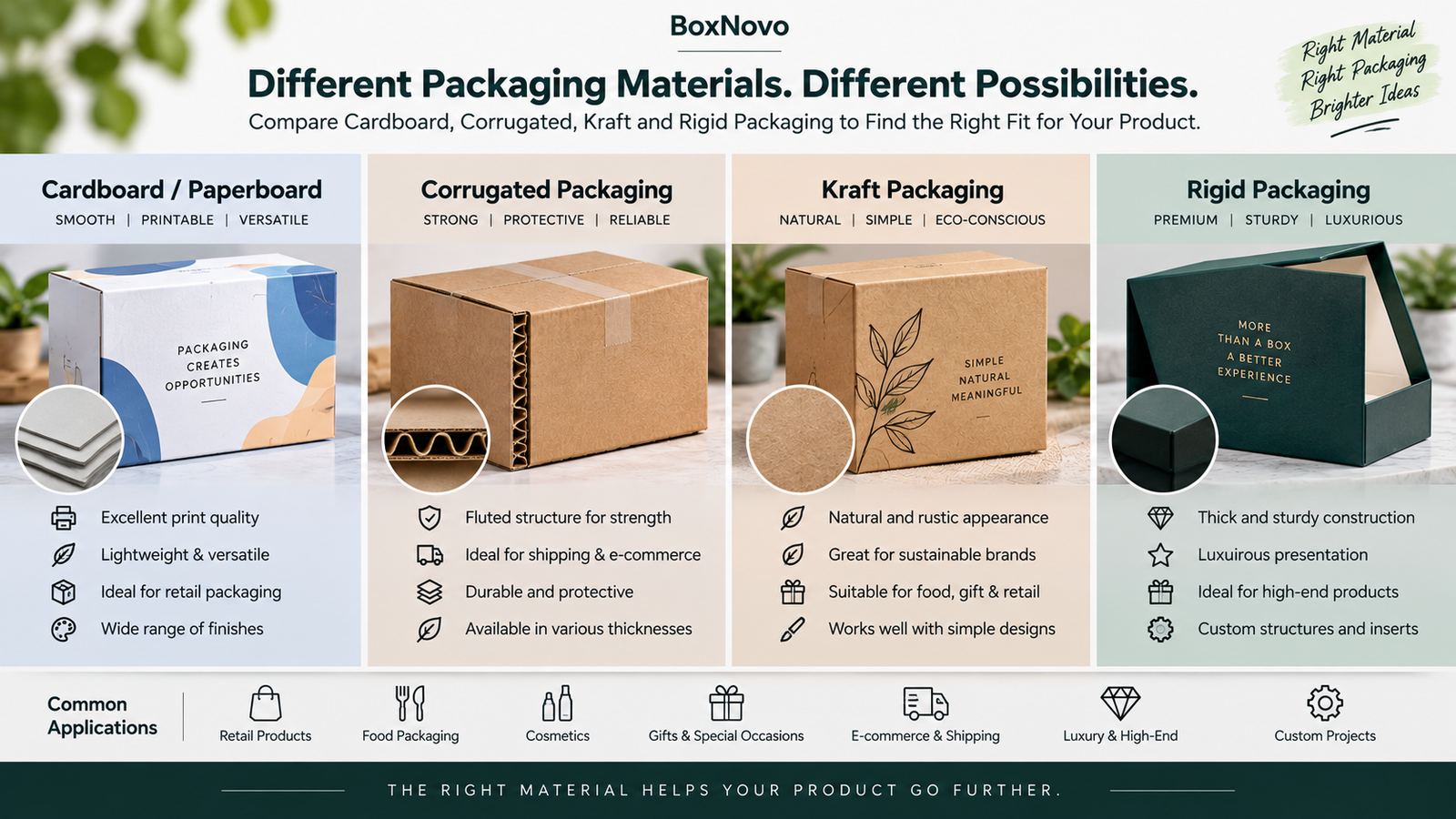
| Material | Main Characteristics | Common Uses | Printing & Branding |
|---|---|---|---|
| Cardboard / Paperboard | Lightweight, versatile and easy to print | Retail boxes, food packaging, product packaging and folding cartons | Excellent for detailed printed graphics |
| Corrugated | Fluted structure provides cushioning and rigidity | Shipping cartons, e-commerce packaging and protective outer boxes | Suitable for printed branding and shipping information |
| Kraft | Natural-looking paper-based material with a distinctive appearance | Retail, food, gift and environmentally positioned packaging | Works well with simple and natural-looking designs |
| Rigid Board | Thick, strong and premium-feeling construction | Luxury packaging, gift boxes and presentation packaging | Excellent for premium branding and detailed finishes |
Cardboard Packaging
Cardboard packaging is widely used for custom product boxes because it offers a practical combination of weight, printability, versatility and structural performance.
Cardboard and paperboard can be converted into many packaging formats, making them suitable for products that need printed branding without the heavier construction of rigid packaging.
Common applications include:
- Retail boxes
- Product packaging
- Food packaging
- Cosmetic packaging
- Apparel packaging
- Small consumer-product boxes
- Promotional packaging
For a closer look at this material category, see BoxNovo’s cardboard packaging options.
Why Choose Cardboard Packaging?
- Good balance between weight and structure
- Suitable for detailed printed artwork
- Available in many box styles
- Works well for branded retail presentation
- Can be produced in custom dimensions
The exact performance of a cardboard box depends on the board specification, construction, dimensions, and intended use. For heavier products or demanding shipping conditions, a different material or a stronger construction may be more appropriate.
Corrugated Packaging
Corrugated packaging is constructed with a fluted layer combined with one or more liner layers. The fluted structure creates additional rigidity and helps the package withstand handling and transportation.
Corrugated packaging is particularly useful when protection during shipping is a major requirement.
Typical applications include:
- E-commerce shipping boxes
- Shipping cartons
- Subscription packaging
- Product protection during transportation
- Outer packaging for retail products
For custom corrugated box solutions, BoxNovo offers custom corrugated boxes.
What Is the Difference Between Cardboard and Corrugated Packaging?
The main difference is their construction and typical use.
| Factor | Cardboard / Paperboard | Corrugated |
|---|---|---|
| Construction | Generally a flat paperboard structure | Uses a fluted layer between liner layers |
| Typical Strength | Suitable for many retail and product boxes | Generally better suited to shipping and impact protection |
| Appearance | Smooth and presentation-focused | Functional and protective, with multiple print options |
| Common Application | Retail and consumer-product packaging | Shipping and e-commerce packaging |
Neither material is automatically better. The decision should be based on what the package needs to do. A retail box that spends most of its life on a shelf may prioritize print quality and presentation, while an e-commerce package may require greater protection during transportation.
Kraft Packaging
Kraft packaging is recognized for its natural paper appearance and is commonly selected when a brand wants a simple, organic or understated visual style.
Kraft packaging can be used for retail products, food-related packaging, gift packaging and other applications where the material’s natural appearance supports the product’s presentation.
BoxNovo provides a dedicated kraft packaging material category for brands considering this type of packaging.
When Should You Use Kraft Packaging?
Kraft can be a suitable option when the desired package combines practical paper-based construction with a natural-looking appearance.
Consider kraft packaging when:
- The natural paper appearance fits the brand identity.
- A simple or understated package design is preferred.
- The product benefits from a less glossy visual presentation.
- The packaging needs custom printing while retaining a kraft aesthetic.
- The application suits a paper-based packaging structure.
Kraft should not automatically be described as environmentally superior. Environmental performance depends on factors such as fiber sourcing, coatings, inks, manufacturing, recyclability, reuse and local waste-management systems.
Rigid Packaging
Rigid packaging uses thick, sturdy board to create a more substantial package. It is commonly selected when product presentation, structure and a premium unboxing experience are important.
Rigid boxes can be used for:
- Luxury products
- Premium gifts
- Jewelry and accessories
- High-end cosmetics
- Specialty products
- Presentation packaging
Explore BoxNovo’s rigid packaging material category for more information about this construction.
When Should You Use Rigid Packaging?
Rigid packaging is worth considering when the box itself is an important part of the product presentation and a stronger, more substantial structure is desired.
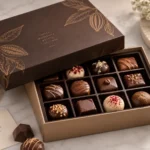
For example, a premium gift may benefit from a substantial lid-and-base structure. BoxNovo’s custom two-piece rigid boxes are one example of this type of packaging format.
For products that require organized presentation, a custom rigid box with an insert can also provide dedicated product positioning and separation.
Paperboard Packaging
Paperboard is widely used for folding cartons and other lightweight printed packaging. Its relatively smooth surface makes it suitable for detailed graphics, product information, branding and retail presentation.
Paperboard packaging can be especially useful when the package needs to balance visual quality, custom dimensions, efficient construction and manageable weight.
When selecting paperboard, consider the required thickness, box structure, product weight, printing process and expected handling conditions rather than choosing material based on appearance alone.
Packaging Material Comparison: Which Material Should You Choose?
| If Your Priority Is… | Material to Consider | Why |
|---|---|---|
| Detailed retail printing | Cardboard / Paperboard | Smooth printable surface and versatile box construction |
| Shipping protection | Corrugated | Fluted structure is designed for greater protection during handling |
| Natural visual appearance | Kraft | Distinctive paper-based appearance |
| Premium presentation | Rigid Board | Thick construction and substantial presentation |
| Product organization | Rigid or paperboard with inserts | Can be designed around the product and insert structure |
This comparison is a starting point rather than a universal rule. The actual material specification should be selected according to the product, dimensions, box structure, handling environment and production requirements.
How Do You Choose the Right Packaging Material?
The most reliable approach is to start with the product rather than the material.
- Define the product dimensions. Measure the product’s length, width and height, including any components that will be packaged with it.
- Evaluate protection requirements. Consider whether the package will remain on a retail shelf, be shipped individually, or experience repeated handling.
- Choose the packaging structure. Decide whether the product needs a folding carton, mailer-style box, rigid box, sleeve, shipping carton or another format.
- Consider presentation. Determine whether the package needs a premium appearance, natural finish, strong retail graphics or simple functional branding.
- Review printing requirements. Consider artwork coverage, colors, text, logos, finishes and any required product information.
- Consider inserts and internal fit. Fragile or premium products may need trays, dividers, foam, paperboard inserts or other internal components.
- Evaluate shipping and storage. Consider package weight, stacking, handling and the environment in which the box will travel.
- Request a physical sample. A sample can reveal fit, structural performance, appearance and printing details that are difficult to judge from a digital design alone.
How Does Packaging Material Affect Product Protection?
Material is only one part of package protection. Box structure, dimensions, closures, inserts and internal clearance can be equally important.
For example, a well-designed paperboard box with a correctly fitted insert may protect a small product better than an oversized box made from a heavier material. Similarly, corrugated packaging may be more appropriate when a package must withstand shipping and handling.
Protection should therefore be evaluated as a complete packaging system rather than by material thickness alone.
How Does Packaging Material Affect Printing?
The surface and construction of a packaging material affect how artwork appears on the finished package.
When evaluating printing, consider:
- Surface smoothness
- Ink coverage
- Color requirements
- Fine text and graphics
- Brand colors
- Coatings and finishes
- Print coverage and artwork placement
For brands that need packaging specifically focused on printed presentation, BoxNovo also has a custom printing packaging category.
Packaging Material Selection for Different Industries
Different products place different demands on their packaging.
- Food: Material selection should consider the food product, intended contact conditions, moisture exposure, grease resistance and applicable packaging requirements.
- Cosmetics: Presentation and printed branding are often important, while the package must also suit the product’s size and shape.
- Retail: Shelf presentation, printing, product visibility and structural performance can all influence material selection.
- E-commerce: Protection during transportation becomes especially important, making structural design and shipping suitability key considerations.
- Gifts: Premium presentation may make rigid or specialty packaging appropriate depending on the product.
BoxNovo’s food box packaging category provides examples of packaging designed for food-related applications.
Packaging Materials and Sustainability
Sustainability cannot be determined from the material name alone. A packaging material’s environmental impact can depend on its raw materials, manufacturing process, coatings, inks, transport, durability, reuse potential, recyclability and the waste-management system available after use.
For that reason, avoid assuming that one material is automatically sustainable in every application.
A practical approach is to use only as much material as the product actually needs, avoid unnecessary components, choose an appropriate structure, and consider whether the package can be reused or recovered in the intended market.
Common Packaging Material Selection Mistakes
- Choosing material before understanding the product. Start with product dimensions and protection requirements.
- Assuming thicker always means better. Structure and internal fit can be just as important as material thickness.
- Ignoring shipping conditions. A package that looks excellent on a shelf may need a different structure for e-commerce shipping.
- Underestimating printing requirements. Complex artwork should be considered before finalizing the material and production method.
- Using unnecessary packaging layers. Additional components can increase material use, weight and cost without adding meaningful value.
- Skipping the physical sample. Digital artwork cannot fully demonstrate physical fit, rigidity, finish or assembly.
Packaging Material Selection Checklist
Before finalizing a custom packaging material, confirm:
- Product dimensions and weight
- Required internal clearance
- Protection requirements
- Box style and construction
- Insert or divider requirements
- Printing and branding requirements
- Surface finish requirements
- Shipping and storage conditions
- Target presentation and customer experience
- Production quantity and budget
- Sample approval requirements
Frequently Asked Questions About Packaging Materials
What are the main types of packaging materials?
The main packaging materials commonly used for custom boxes include cardboard or paperboard, corrugated board, kraft-based packaging and rigid board. The appropriate choice depends on the product, required protection, appearance, printing and packaging structure.
What is the difference between cardboard and corrugated packaging?
Cardboard or paperboard is generally a flat board material used for many retail and product boxes. Corrugated packaging contains a fluted layer between liner layers, giving it a structure that is commonly used for shipping and transportation protection.
When should I use kraft packaging?
Kraft packaging can be appropriate when a natural paper appearance fits the brand or product. It can be used for retail, food, gift and other paper-based packaging applications where that visual style and construction are suitable.
What is rigid packaging used for?
Rigid packaging is commonly used for premium products, gifts, cosmetics, jewelry and other applications where a substantial box structure and presentation are important.
Which packaging material provides more protection?
There is no universal answer because protection depends on material, construction, dimensions, inserts and handling conditions. Corrugated packaging is commonly used when shipping protection is a major requirement, while rigid or paperboard packaging may be appropriate for other product and presentation needs.
How do I choose the right packaging material?
Start with the product’s dimensions, weight and protection requirements. Then consider the box structure, printing, presentation, shipping conditions, inserts, production quantity and budget. A physical sample is useful before approving a larger production run.
Choosing the Right Packaging Material for Custom Boxes
The right packaging material is the one that fits the job. Cardboard and paperboard can provide versatile printed packaging, corrugated board is commonly selected for shipping protection, kraft offers a distinctive natural appearance, and rigid board can create a substantial premium presentation.
The best decision comes from evaluating the complete packaging system: product dimensions, structure, material, printing, internal fit, handling and customer experience.
If you already know your product dimensions and packaging requirements, you can request a custom packaging quote from BoxNovo and discuss the material and structure that fit your application.
Final Thoughts
Packaging material selection should be based on function first and appearance second. A successful package protects the product, communicates the brand, fits the intended sales channel and provides an appropriate customer experience.
For custom packaging, start with the actual product and work outward: define the required dimensions, select the structure, evaluate the appropriate material, finalize the artwork, and approve a physical sample before moving into full production.