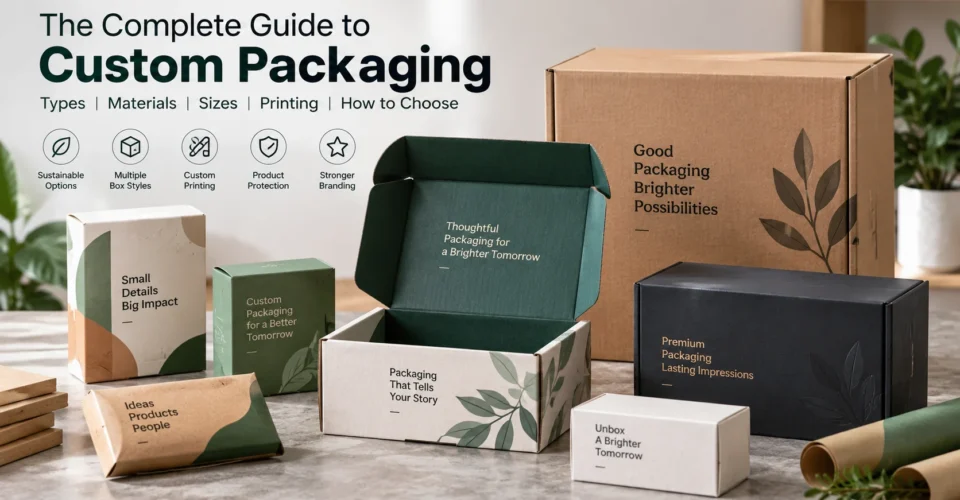
Quick answer: Custom packaging is packaging made to your product’s exact size, structure, material, print and finish, instead of a stock box. To choose it, define the packed product first, then pick the box style, material and board strength, set the inside dimensions, prepare artwork on the dieline, and approve a proof or sample before production.
Key facts at a glance
- Three core decisions: structure (box style), material (board) and graphics (print and finish)
- Main types: folding cartons, mailer boxes, corrugated shipping boxes, rigid boxes, sleeves, display boxes, inserts and flexible bags
- Paperboard thickness: measured in points; 1pt = 0.001 in
- Corrugated flutes: E-flute is about 1.6 mm thick, B-flute 3.2 mm, C-flute 4.0 mm
- Box strength: a single-wall 32 ECT box is typically used for packages up to about 65 lb
- Shipping size: UPS, FedEx and, since July 12, 2026, USPS use a DIM divisor of 139
- Artwork: 0.125 in (3 mm) bleed, CMYK, 300 DPI, laid out on the supplier’s dieline
- Recyclability: 96.5% of corrugated boxes were recycled in the US in 2018 (EPA)
In this guide
- What custom packaging is
- Why custom packaging matters
- Start with the product
- Types of custom packaging
- Common custom box styles
- Packaging materials and board strength
- Custom box dimensions and DIM weight
- Packaging design and artwork
- Printing methods and finishes
- Packaging inserts
- E-commerce vs retail packaging
- Sustainable custom packaging
- How custom packaging cost is determined
- The custom packaging process
- Packaging by product category
- Common mistakes
- Frequently asked questions
- Sources
What Is Custom Packaging?
Custom packaging is packaging manufactured or converted to specified requirements for a product or brand. Those requirements can include dimensions, box style, material, board strength, printing, finish, closure, inserts and other structural details.
Unlike a standard stock box, a custom package is designed around the product and its intended use. That does not automatically make it more expensive; it means the specification can be tailored to the job the package must do. Learn more about the basics in this packaging definition guide.
Custom Packaging vs Stock Packaging
| Factor | Stock Packaging | Custom Packaging |
|---|---|---|
| Size | Fixed standard sizes | Made to your product’s dimensions |
| Printing | Plain or labeled | Printed with your brand, product information and finishes |
| Fit and protection | Often needs void fill | Designed for a snug fit, with inserts where needed |
| Lead time | Available from stock | Produced to order after artwork approval |
| Minimum order | Any quantity | Set by the supplier and print method |
| Best for | Testing, low volumes, internal shipping | Brands, retail, e-commerce, gifting and repeat orders |
Primary, Secondary and Tertiary Packaging
- Primary packaging: touches the product, such as a bottle, jar, pouch or wrapper.
- Secondary packaging: the branded box, carton or sleeve around the primary package; this is what most people mean by custom packaging.
- Tertiary packaging: shipping cartons, pallets and stretch wrap used to move products in bulk.
Why Custom Packaging Matters
| Packaging Goal | What the Package Needs to Accomplish |
|---|---|
| Product fit | Hold the packed product securely without unnecessary empty space. |
| Protection | Match structure and material to the product’s weight, fragility and handling environment. |
| Brand presentation | Use structure, graphics, print and finish consistently with the brand. |
| Retail presentation | Make the product and key information easy to understand on a shelf or display. |
| E-commerce | Balance protection, packing speed, opening experience and shipping dimensions. |
| Operational consistency | Create a repeatable specification for packing, reorders and quality checks. |
A useful way to think about custom packaging is as three connected decisions: structure, materials and graphics. The right balance depends on the product, sales channel, protection needs and customer experience. For a wider view of what packaging does for a brand, see these benefits of good packaging.
Start With the Product, Not the Box
Before selecting a box style, define the product and its actual packed configuration:
- What are the product’s maximum length, width and height when ready to be packed, including caps, pumps or handles?
- What does it weigh, alone and with its components?
- Is it fragile, sharp-edged, liquid, oily, easily scratched, temperature-sensitive or otherwise delicate?
- Will it be sold on a retail shelf, shipped directly to customers, or both?
- Will the package contain an insert, pouch, bottle, accessory, manual or multiple components?
- Does the customer need to open and close the package repeatedly?
- Are there labeling or regulatory requirements for the product category or market?
Measure the configuration that will actually go inside the box. If a fitted insert or protective component is part of the package, include its space before you finalize the internal dimensions.
Types of Custom Packaging
Custom packaging boxes and bags fall into a few main formats. Each one solves a different job, from shelf display to parcel shipping:
| Packaging Type | Common Applications | Main Decision |
|---|---|---|
| Folding carton boxes | Retail, cosmetics, food, supplements and lightweight consumer products | Balance print quality, board thickness and closure style |
| Branded mailer boxes | E-commerce, subscriptions and direct-to-consumer orders | Prioritize fit, closure, packing speed and shipping strength |
| Corrugated shipping boxes | Shipping, fulfillment and heavier products | Match flute and board strength to weight and handling |
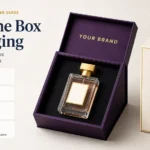
| Luxury rigid boxes | Premium gifts, luxury goods, jewelry and electronics | Use when structure and presentation are part of the product experience |
| Custom sleeve boxes | Soap, gift sets, food trays and limited editions | Add branded presentation around another package or product |
| Counter display boxes | Counter displays, retail pegs and point of sale | Plan how the package is shown, accessed and restocked |
| Inserts and trays | Fragile, multi-part or presentation-focused products | Hold components in position and organize the interior |
| Custom mylar bags | Food, coffee, snacks, supplements and samples | Choose barrier, closure and window options for the contents |
For shelf-ready cartons in every size and style, browse BoxNovo’s printed retail boxes.
Common Custom Box Styles
The box style is the structure: how the box folds, closes and opens. Choosing the style before the artwork avoids costly redesigns.
| Box Style | How It Works | Best For |
|---|---|---|
| Straight tuck boxes | Top and bottom tuck flaps both close from front to back | Premium retail cartons and front windows |
| Reverse tuck end boxes | Top and bottom tuck flaps close in opposite directions; uses board efficiently | Cosmetics, supplements and lightweight retail products |
| 1-2-3 bottom boxes | Tuck top with an interlocking snap-lock bottom | Bottles, jars and heavier cartons |
| Seal end cartons | Ends glued shut; customer tears or opens a flap | Cereal, food and products that should stay sealed |
| Roll end tuck front mailer | One-piece die-cut corrugated box with a locking front tuck | E-commerce and subscription boxes |
| Regular slotted container (RSC) | Four equal-length flaps on top and bottom; outer flaps meet in the middle | Shipping cartons; the most common corrugated style |
| Two-piece rigid boxes | Separate lid lifts off a rigid base | Gifts, apparel, jewelry and luxury sets |
| Magnetic closure gift boxes | Book-style rigid box held shut by hidden magnets | Premium launches, PR kits and gift sets |
| Sleeve and tray boxes | A tray slides out of an outer sleeve | Chocolates, soap, gift cards and accessories |
| Pillow and gable boxes | Curved or handled die-cut shapes | Favors, bakery, gifts and takeaway items |
The Fibre Box Association describes the RSC (FEFCO code 0201) as the most common box style with very little manufacturing waste, while mailer boxes are usually one-piece die-cut styles such as the roll end tray with locking cover (FEFCO 0427). To compare closures, openings and constructions side by side, browse every box style.
Packaging Materials and Board Strength
There is no single best material. Material selection should follow the product, structure, handling, print needs and presentation.
| Material | What It Is | Often Used For |
|---|---|---|
| SBS paperboard (solid bleached sulfate) | White throughout with a smooth coated surface for high-quality print | Cosmetics, personal care, pharmaceutical and premium retail cartons |
| CRB (coated recycled board) | Made from recycled fibers, often 100% recycled, with a white coated top side | Cost-effective cartons such as cereal, dry food and household goods |
| CUK / kraft board | Unbleached kraft fibers; strong, with a natural brown look or a coated white top | Natural brands, food, beverage carriers and multipacks |
| Corrugated board | A fluted medium between linerboards | Mailers, shipping boxes, displays and heavier products |
| Rigid board (greyboard or chipboard) | Thick board, often about 2 to 3 mm, wrapped in printed or specialty paper | Luxury, gift, jewelry and electronics presentation boxes |
| Flexible films and laminates | Layered films or foil laminates that form bags and pouches | Food, coffee, snacks and products needing a moisture barrier |
Folding carton board grades follow industry descriptions from Packaging Strategies. For a deeper comparison, read this packaging material types guide start with BoxNovo’s packaging materials overview, and compare cardboard packaging options, kraft packaging materials, corrugated board options and rigid packaging materials.
Paperboard Thickness in Points
In the US, paperboard thickness (caliper) is measured in points, where 1pt equals 0.001 in, so 18pt board is 0.018 in thick (Lamitech). The higher the number, the stiffer the box. Folding cartons commonly use about 14pt to 24pt: thinner board for light items such as lip balm, thicker board for larger or heavier cartons.
Corrugated Flute Sizes
| Flute | Thickness | Flutes per Foot | Typical Use |
|---|---|---|---|
| A-flute | About 4.8 mm (3/16 in) | 33 ± 3 | Cushioning and stacking strength |
| B-flute | About 3.2 mm (1/8 in) | 47 ± 3 | Crush resistance, displays, die-cut boxes |
| C-flute | About 4.0 mm (5/32 in) | 39 ± 3 | General shipping cartons |
| E-flute | About 1.6 mm (1/16 in) | 90 ± 4 | Mailer boxes and printed retail boxes |
| F-flute | About 0.8 mm (1/32 in) | 125 ± 4 | Small retail boxes with a thin profile |
Flute measurements are standard US values listed in the corrugated fiberboard reference. Single-wall board has one fluted layer; double-wall and triple-wall boards add more layers for stacking strength and puncture resistance.
Box Strength: ECT and BCT
The edge crush test (ECT) measures how much force the board can take on its edge. A 32 ECT board resists 32 lb per linear inch of edge, and a single-wall 32 ECT box is typically used for packages up to about 65 lb (Parcelpath). Box compression strength (BCT) estimates how much weight a box can carry when stacked. Estimate it for your box size with this box compression strength calculator.
How to Choose Custom Box Dimensions
Box dimensions are written as length × width × height (or depth). For most boxes, length and width describe the opening and height is the distance between the top and bottom. The critical question is whether a quote uses inside or outside dimensions: inside dimensions decide the fit, outside dimensions decide shipping cost and shelf space.
- Measure the packed product at its widest points, including all components.
- Add clearance: a small allowance so the product slides in without forcing.
- Add insert space: include the thickness of any inserts, padding or dividers.
- Confirm the dimension convention with the supplier: inside or outside, and which side is the opening.
- Check the outer size against shelf space and carrier dimensional weight.
- Sample the fit for tight or unusual products before full production.
Work out a starting size with the custom box size calculator, and read more about choosing custom box sizes and measuring a shipping box.
Dimensional (DIM) Weight
Carriers bill shipping on the greater of actual weight or dimensional weight. DIM weight is length × width × height in inches divided by a divisor. UPS and FedEx use 139, and from July 12, 2026, USPS also uses 139 (down from 166) for Priority Mail Express, Priority Mail, Ground Advantage and Parcel Select packages over one cubic foot, with fractional dimensions rounded up to the next inch (DCL Logistics).
Example: an 18 × 14 × 10 in box is 2,520 cubic inches. Divided by 139, that is about 18.1 lb, billed as 19 lb even if the product weighs 6 lb. A right-sized custom box cuts that cost. Check your box with the dimensional weight calculator.
Packaging Design: Structure, Graphics and Information
Packaging design is not only artwork. The structure, material and graphics have to work together, and the design must leave room for the information required for the product and market. For regulated products such as food, cosmetics, supplements and CBD, requirements vary by product category and jurisdiction, so the brand should verify the rules before printing.
Prepare Artwork Around the Final Dieline
- Get the dieline: the flat template of your box with cut, fold and glue lines.
- Add bleed: extend background artwork 0.125 in (3 mm) past every cut line.
- Respect safe zones: keep text and logos away from cuts, folds and glue areas.
- Use the right color mode: CMYK for full-color printing, Pantone (PMS) for exact brand colors.
- Use 300 DPI images at final print size, and outline or embed fonts.
- Design every panel, including sides, bottom and inside, not just the front.
- Check barcodes and small text for size, contrast and placement.
Plan the full design with these steps for custom packaging design and ideas for retail packaging design. Check margins with the bleed and safe zone guide, convert brand colors with the CMYK color converter, and preview your artwork with the 3D packaging mockup generator.
Printing Methods and Finishes
The print method decides how custom printed boxes look, how much setup they need and which quantities are economical.
| Print Method | How It Works | Best For |
|---|---|---|
| Digital | Prints directly from the file with no plates; minimal setup | Short runs, samples, seasonal or versioned designs |
| Offset (lithographic) | Uses printing plates; fine detail and consistent color | Medium to large runs of folding cartons and premium retail boxes |
| Flexographic | Flexible plates; efficient at very high volumes | Corrugated boxes, labels and flexible packaging at scale |
Print method comparisons follow GlobalVision: plates add setup time and cost for offset and flexo, which pays back on longer runs, while digital suits shorter runs and versioning.
| Finish | Effect | Use It When |
|---|---|---|
| Matte or gloss coating / lamination | Protects print; matte looks modern, gloss makes colors vivid | Almost every printed box |
| Soft touch lamination | Velvety, premium feel | Luxury, beauty and gift packaging |
| Spot UV | Raised gloss on selected areas | Highlighting a logo or pattern |
| Foil stamping | Metallic gold, silver or holographic accents | Premium branding and limited editions |
| Embossing and debossing | Raised or pressed-in artwork you can feel | Logos and tactile details |
| Windows | Die-cut opening, with or without clear film | Showing the product on the shelf, as on custom window boxes |
Solve structure and printing first. Add finishes when they serve a clear visual, tactile or functional purpose.
Packaging Inserts: When Are They Useful?
An insert is useful when the product needs positioning, separation, organization or extra presentation. Design the insert together with the outer box, because it changes the usable inside space.
| Insert Type | Best For |
|---|---|
| Paperboard inserts | Bottles, jars and cosmetics in folding cartons |
| Corrugated partitions | Separating bottles and multiple items in shipping boxes |
| Foam inserts (EVA or PE) | Electronics, glass and high-value fragile items |
| Molded pulp | Paper-based protection for electronics and glass |
| Rigid trays | Luxury sets where the interior layout is part of the presentation |
See how box partition inserts work, and for premium sets consider rigid boxes with inserts.
E-Commerce vs Retail Packaging
| Consideration | E-Commerce | Retail |
|---|---|---|
| Primary focus | Protection, packing efficiency, shipping cost and opening experience | Shelf presentation, product information and visibility |
| Common formats | Mailer boxes, corrugated shipping boxes and inserts | Folding cartons, display boxes, sleeves and rigid boxes |
| Design priority | Fit, closure, handling, DIM weight and easy opening | Visual hierarchy, information, structure and display |
| Testing | Drop and vibration testing for parcel delivery | Shelf fit, stacking and readability |
| Common mistake | A box much larger than the product | Choosing looks before confirming fit and structure |
For parcel shipping, ISTA 3A is a common test procedure that simulates parcel delivery for packages up to 70 kg (150 lb) with drops and vibration (ISTA). Many brands use kraft mailer boxes for e-commerce and ship retail cartons inside a corrugated outer box.
Branded Packaging and the Unboxing Experience
- Keep the brand recognizable without letting graphics interfere with shipping labels or carrier information.
- Use interior printing when the opening moment is part of the experience.
- Use inserts for useful content such as care instructions, product guidance or a short thank-you message.
- Seal boxes with branded packaging stickers for a finished look and visible tamper evidence.
- For launches and creators, influencer PR boxes turn the unboxing into content.
- Keep every added component purposeful; extra material adds cost and packing time.
Sustainable Custom Packaging
Paper-based packaging has some of the highest recycling rates of any material. According to the EPA, 96.5% of corrugated boxes and 80.9% of all paper and paperboard containers and packaging were recycled in the US in 2018 (EPA).
- Right-size the box: less empty space means less board, less void fill and lower DIM weight.
- Choose recycled or kraft board: CRB and recycled corrugated use recovered fibers.
- Keep it mono-material: an all-paper box and insert is easier to recycle than mixed materials.
- Use finishes carefully: heavy plastic laminations and large foil areas can make recycling harder.
- Make honest claims: under the FTC Green Guides, a package can be called “recyclable” without qualification only when recycling facilities are available to a substantial majority (at least 60%) of consumers or communities where it is sold (Kelley Drye summary of the Green Guides).
Explore BoxNovo’s eco-friendly packaging options, compare custom kraft boxes, and estimate board use with the material waste calculator.
How Custom Packaging Cost Is Determined
There is no reliable universal price for custom packaging. A quote depends on the specification and the quantity.
| Cost Driver | Why It Affects the Quote |
|---|---|
| Dimensions | Larger boxes use more board and fewer fit on each press sheet. |
| Material and board | Rigid board costs more than paperboard; thicker or specialty board costs more than standard. |
| Structure | Complex folds, closures, windows or multi-part builds add production steps. |
| Printing method | Digital has low setup for short runs; offset and flexo plates pay back on longer runs. |
| Print coverage and colors | Full coverage, inside printing and Pantone colors add cost. |
| Finishing | Foil, embossing, spot UV and soft touch add materials, tooling or steps. |
| Tooling | Custom cutting dies and foil or embossing plates are usually one-time costs. |
| Quantity | Setup costs spread over more boxes, so unit price usually falls as quantity rises. |
| Inserts and components | Extra pieces add material, converting and assembly. |
| Shipping | Flat-shipped boxes cost less to deliver than rigid boxes shipped assembled. |
How to Lower Custom Packaging Costs
- Use a standard box style before a fully custom structure.
- Right-size the box to reduce board use and DIM weight.
- Limit special finishes to one or two that matter most.
- Use one design across sizes or products where possible.
- Order larger quantities when storage allows, to spread setup costs.
- Compare quotes on the same specification, not just the unit price.
Get a budget range in seconds with the instant packaging price tool.
The Custom Packaging Process, Step by Step
- Define the job: protection, retail display, shipping, gifting, branding or a combination.
- Define the packed product: dimensions, weight and every component that must fit.
- Choose the structure: the box style that matches the use case.
- Choose the material: balance protection, structure, print and presentation.
- Confirm dimensions: agree on inside or outside dimensions with the supplier.
- Get the dieline: use the approved structural template for artwork.
- Prepare artwork: bleed, safe zones, color, resolution and file format.
- Select finishes: only where they support the package.
- Proof and sample: check fit, structure, print, color and opening.
- Production and delivery: printing, finishing, cutting, folding, gluing, packing and shipping.
Why Sampling and Proofing Matter
A digital proof checks artwork; a physical sample checks the real box. For complex, high-value or tightly fitted packaging, review:
- Product fit and internal clearance
- Box structure and rigidity
- Opening and closing
- Artwork placement and panel order
- Color expectations
- Insert positioning
- Barcode and small-text readability
- Packing and unpacking time
What to Send a Packaging Supplier for a Quote
| Specification | What to Provide |
|---|---|
| Product | Product name and short description |
| Packed dimensions | Maximum length, width and height of everything that goes in the box |
| Weight | Product or packed weight |
| Box style | Preferred structure, if known |
| Material | Preferred board or performance requirement, if known |
| Quantity | Estimated order quantity, and expected reorders |
| Artwork | Logo, artwork files or design brief |
| Print and finish | Print coverage, inside printing and special effects |
| Components | Inserts, windows, sleeves, closures or other parts |
| Use case | Retail, e-commerce, gifting, shipping or subscription |
| Delivery | Destination and target date |
Custom Packaging by Product Category
| Product Category | Common Packaging | Key Considerations |
|---|---|---|
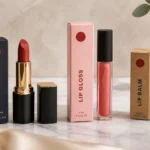
| Cosmetic packaging boxes | Folding cartons, rigid boxes, inserts | Presentation, bottle fit, ingredient panels, premium finishes |
| Custom food boxes | Food-safe cartons, custom bakery boxes, windows, bags | Food-contact materials, grease resistance, labeling rules |
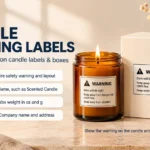
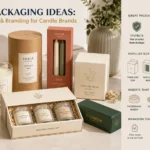
| Custom candle boxes | Folding cartons, 1-2-3 bottom boxes, rigid gift boxes | Glass protection, weight, warning labels |
| Purpose-built soap packaging | Sleeves, kraft boxes, window boxes | Compact fit, natural look, ingredient information |
| Custom jewelry boxes | Rigid boxes, drawer boxes, inserts | Presentation, small-item security, gift appeal |
| CBD packaging boxes and supplements | Tuck end cartons, display boxes, bottle inserts | Required label details, dropper bottle fit, tamper evidence |
| Custom bottle boxes | Bottle boxes with dividers, shipping boxes | Breakage protection, partitions, carrier rules |
| Custom apparel boxes | Mailer boxes, two-piece boxes, tissue and stickers | Folded size, unboxing, returns |
See how BoxNovo serves each industry we package, from beauty and food to cannabis and apparel.
Common Custom Packaging Mistakes
| Mistake | Fix |
|---|---|
| Measuring the bare product instead of the packed configuration | Measure everything that goes inside, including inserts and accessories |
| Choosing a box style before defining how the package will be used | Define retail, shipping or gifting use first |
| Choosing material for looks only | Match board and flute to weight, fragility and handling |
| Confusing inside and outside dimensions | Confirm the supplier’s dimension convention in writing |
| Final artwork before the dieline is confirmed | Approve the structure and dieline first |
| An oversized shipping box | Right-size the box and check DIM weight |
| Skipping a sample for a tight fit | Order a sample when fit, structure or color is critical |
| Comparing quotes with different specifications | Compare the same size, board, print, finish and quantity |
| Finishes that add cost without purpose | Choose one or two finishes that support the brand |
| Unqualified “eco-friendly” or “recyclable” claims | Make specific, accurate claims that follow the FTC Green Guides |
How BoxNovo Fits Into the Packaging Process
BoxNovo makes custom packaging in custom sizes and styles, with cardboard, corrugated, kraft and rigid materials, printing and finishing. Box formats include mailer, seal end, reverse tuck, straight tuck, roll end tuck front, sleeve, display and die-cut boxes, plus labels, bags and printed inserts such as custom printing products.
For a packaging project, prepare the product dimensions, quantity, preferred structure if known, artwork and any inserts or finishes. If you are not sure which structure or material fits, share the product and use case so the packaging can be specified before final artwork.
Custom Packaging Quote Checklist
- ☐ Product name and description
- ☐ Packed length × width × height
- ☐ Product or packed weight
- ☐ Desired box style
- ☐ Material or performance requirement
- ☐ Quantity
- ☐ Artwork or logo
- ☐ Printing requirements
- ☐ Finish
- ☐ Insert, sleeve, window or closure
- ☐ Retail, e-commerce or shipping use
- ☐ Delivery destination and timing
- ☐ Sample or proof requirement
Frequently Asked Questions About Custom Packaging
What is custom packaging?
Packaging made to specified product or brand requirements, such as dimensions, structure, material, printing, finishing and inserts.
What are the main types of custom packaging?
Custom packaging boxes include folding cartons, mailer boxes, corrugated shipping boxes, rigid boxes, sleeves and display boxes, plus inserts and flexible bags or pouches.
How do I choose the right custom box?
Start with the product’s packed dimensions, weight, fragility and sales channel. Then choose a box style and material that meet those needs.
How should I measure a product for a custom box?
Measure everything that goes inside at its widest points, add a small clearance and any insert thickness, and confirm whether the supplier quotes inside or outside dimensions.
What material is best for custom packaging?
There is no universal best material. Paperboard suits retail cartons, corrugated suits shipping, and rigid board suits premium presentation.
What is the difference between paperboard and corrugated?
Paperboard is a single thick sheet used for folding cartons. Corrugated has a fluted layer between liners, which makes it stronger for shipping.
What does 18pt board mean?
The board is 0.018 in thick. In the US, paperboard thickness is measured in points, and 1pt equals 0.001 in.
What is 32 ECT?
An edge crush rating of 32 lb per linear inch. Single-wall 32 ECT boxes are typically used for packages up to about 65 lb.
Do custom boxes have standard sizes?
Stock boxes come in common sizes, but custom boxes are made to the dimensions your product needs.
How does box size affect shipping cost?
Carriers charge the greater of actual weight or DIM weight. UPS, FedEx and, from July 12, 2026, USPS divide length × width × height by 139.
Do I need a sample before ordering custom packaging?
For complex, high-value or tightly fitted packaging, a sample is the best way to check fit, structure, color and opening before production.
What affects the cost of custom packaging?
Size, material, structure, print method, coverage, finishes, tooling, inserts, quantity and shipping.
Which printing method is best for custom boxes?
Digital suits short runs and samples, offset suits medium to large folding carton runs, and flexo suits high-volume corrugated and labels.
Can custom packaging be used for e-commerce?
Yes. Mailer and corrugated boxes are designed for fulfillment, with protection, fit, packing speed and unboxing considered together.
Is custom packaging recyclable?
Paper and corrugated packaging are widely recycled, but plastic laminations, foils and mixed materials can make recycling harder.
Should I prepare artwork before getting the box dieline?
No. Confirm the final dieline and the supplier’s artwork requirements before finalizing artwork.
What is a packaging insert?
An internal component that positions, separates, protects or presents a product and its accessories.
What should I send when requesting a custom packaging quote?
Product details, packed dimensions, weight, quantity, preferred style, material, artwork, print and finish needs, inserts and delivery details.
Final Takeaway
The best custom packaging decisions start with the product, not the artwork. Define the packed dimensions, protection needs and sales channel first. Then choose the box style, material and board strength, right-size the box for shipping, prepare artwork on the approved dieline, and add finishes that serve a purpose. A clear specification makes quotes easier to compare, reduces production problems and gives customers a better first impression.
Ready to turn your packaging plan into a project? Prepare the checklist above and request a packaging quote with your dimensions, quantity, preferred style and design requirements.
Sources
- Packaging Strategies: folding carton substrates (SBS, CRB, CUK)
- Lamitech: paperboard caliper and points
- Corrugated fiberboard: standard flute sizes
- Fibre Box Association via IoPP: box style basics
- Parcelpath: 32 ECT box strength
- DCL Logistics: USPS DIM weight changes, July 2026
- GlobalVision: packaging printing technologies
- ISTA: Procedure 3A overview
- EPA: containers and packaging recycling data
- Kelley Drye: FTC Green Guides recyclable claims