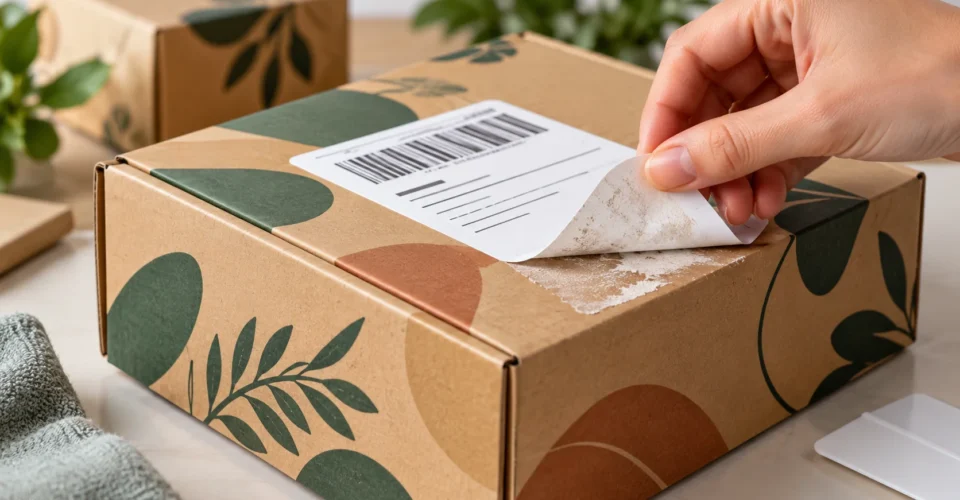
If you need to know how to remove stickers without damaging the surface underneath, start with the material—not the cleaner. A sticker on glass can tolerate a very different approach from a sticker on raw cardboard, a printed paperboard carton, a wrapped rigid box, plastic, or painted metal.
The safest general approach is to identify the surface, test a small hidden area, soften or loosen the sticker only as much as necessary, peel slowly, and treat remaining adhesive separately. For paper-based and printed packaging, use as little moisture, friction, heat, and solvent as possible. A method that works on a glass jar can permanently mark a printed box.
This guide covers sticker removal from packaging, product boxes, ecommerce cartons, retail packaging, plastic, glass, and metal. It also explains what causes adhesive residue, how to handle old and stubborn stickers, and how businesses can reduce residue problems by choosing labels and adhesives more carefully.
How to Remove Stickers Safely
The safest sticker-removal method depends on four things: the surface material, the surface finish, the sticker or label construction, and how strongly or how long the adhesive has bonded. There is no single remover that is safe for every packaging surface.
- Identify the surface. Determine whether you are working with raw cardboard, printed paperboard, a coated or laminated box, a wrapped rigid box, plastic, glass, metal, or another finish.
- Check the label. Paper labels can tear and leave fibers or adhesive behind; film or vinyl labels may peel differently.
- Test first. Apply any liquid, solvent, heat, or abrasive method to a small inconspicuous area before treating the visible surface.
- Start with the least aggressive practical method. Try careful peeling before moving to heat or a cleaning agent.
- Separate sticker removal from residue removal. Removing the label and removing the adhesive left behind are two different steps.
- Stop if the surface begins changing. If printed ink lifts, a coating becomes dull, fibers pull up, plastic clouds, or paint changes, stop rather than escalating the treatment.
Why Stickers Leave Adhesive Behind
Sticker residue is leftover adhesive, not simply dirt. Many product labels, barcode labels, shipping labels, and stickers use pressure-sensitive adhesive that bonds when pressure is applied. The label face can come away while part of the adhesive remains attached to the surface.
Residue can become harder to deal with when a label has stayed in place for a long time, when the surface is porous or textured, when temperature changes affect the adhesive, or when the adhesive was not well matched to the application. These factors are especially important for reusable containers, retail packaging, and ecommerce packaging.
The Two Problems: Removing the Sticker vs. Removing the Adhesive
Treat the job as two stages.
| Stage | What you are trying to do | Main risk |
|---|---|---|
| 1. Remove the sticker | Separate the label face and backing from the surface. | Tearing the label, lifting printed material, or pulling the surface finish. |
| 2. Remove residue | Loosen and lift the adhesive that remains. | Staining, scratching, dulling, dissolving a coating, or spreading the adhesive. |
This distinction matters because a method that helps lift a label can be unnecessary—or even harmful—once only a thin adhesive film remains.
How to Remove a Sticker Step by Step
Step 1: Start at an Edge
Use a fingernail or a plastic card to lift a corner when the surface can tolerate it. Avoid starting with a metal blade on packaging. Once the corner is free, peel gradually instead of pulling sharply.
Step 2: Peel Slowly and Close to the Surface
A slow, controlled peel gives the adhesive more time to release and reduces the chance of tearing the label into small pieces. If the label begins splitting, stop and change your approach rather than repeatedly yanking at it.
Step 3: Use Gentle Heat Only When the Surface Can Tolerate It
Low, controlled heat can soften some adhesives and make a label easier to peel. Keep the heat moving, use the lowest useful setting, and avoid prolonged heating. Heat is not a universal solution: some plastics, coatings, finishes, and printed surfaces can be damaged by excessive temperature.
Step 4: Remove Remaining Adhesive Separately
Once the label is off, look at what remains. A thin sticky film often needs a different treatment than the original label. Start with a soft cloth and the mildest compatible cleaner; escalate only after testing.
Step 5: Clean and Dry the Surface
After the adhesive is gone, remove any cleaning product left behind. On packaging, drying matters because excess moisture can affect paper fibers, coatings, wraps, and adhesives.
How to Remove Label Adhesive From Packaging
Packaging requires more caution than many household hard surfaces because the visible surface may be printed, coated, laminated, wrapped, textured, or made from porous fibers.
If you are comparing paperboard, corrugated board, rigid packaging, plastic, glass, and other substrates before choosing a removal method, this packaging material reference can help you frame the material decision first.
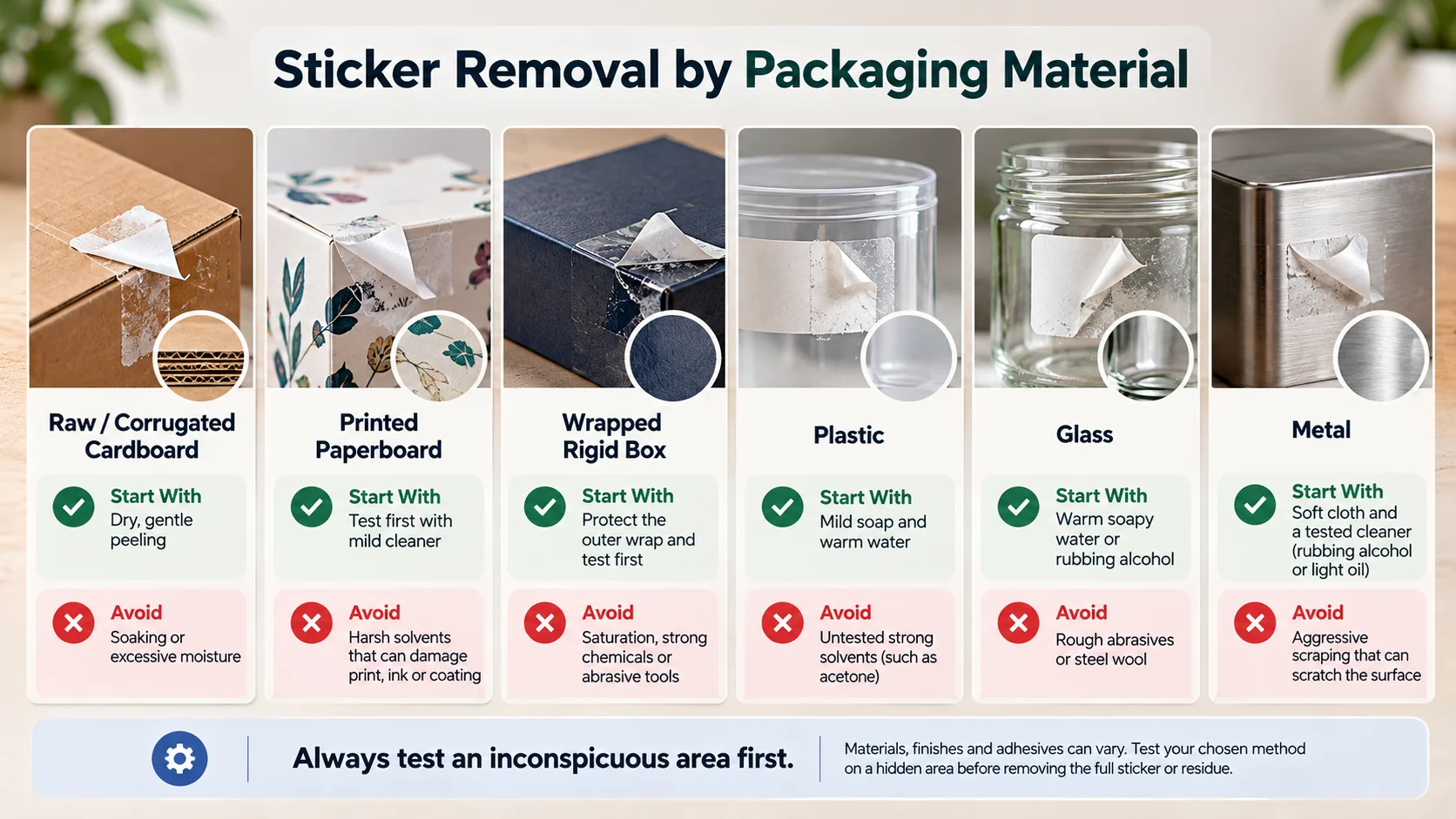
| Packaging surface | Safer starting approach | Main concern | Avoid as a first move |
|---|---|---|---|
| Raw cardboard / corrugated board | Dry peeling; gentle mechanical lifting | Fiber pull, warping, water marks | Soaking the board |
| Printed paperboard | Careful peeling; limited low heat after testing | Ink or coating damage | Aggressive solvents or wet scrubbing |
| Gloss-coated carton | Careful peel; test a small area before cleaning | Dulling or coating change | Abrasive pads |
| Laminated packaging | Peel slowly; test cleaner on hidden area | Lifting or separating the laminate | Excess heat and aggressive scraping |
| Wrapped rigid box | Treat the outer wrap as the surface | Paper/wrap lifting or staining | Saturating the wrap |
| Plastic packaging | Soap/water first; plastic card if appropriate | Clouding, scratching, solvent reaction | Acetone unless compatibility is confirmed |
| Glass packaging | Warm soapy water; plastic scraper for thick residue | Scratches on coated/decorative glass | Steel wool or rough abrasives |
| Metal packaging | Soft cloth; suitable cleaner after testing | Paint/coating damage | Aggressive scraping |
How to Remove Adhesive From Printed Paperboard and Cardboard Boxes
If the box is made from paperboard or corrugated cardboard, assume that water and solvents can change the surface until you have tested otherwise. Printed ink, coatings, laminations, and the paper fibers underneath can all respond differently.
For boxes where the board itself is the visible surface, purpose-built cardboard packaging can also be evaluated with the intended labeling and handling conditions in mind.
- Peel slowly rather than pulling the label straight up.
- Keep moisture to a minimum on porous board.
- Do not saturate the box to soften the label.
- Avoid metal blades that can cut the liner or printed surface.
- If ink, coating, or fibers begin lifting, stop.
- Allow a treated area to dry naturally rather than trapping moisture against the box.
For premium printed packaging, the objective is not simply to make the adhesive disappear. It is to remove the label while preserving the appearance of the package underneath.
How to Remove Adhesive From Rigid Boxes
A rigid box may have a paper wrap, printed sheet, coating, or decorative finish over a rigid board structure. Treat the outer finish—not the internal board—as the surface you are protecting.
Start with dry, controlled peeling. If a label resists, test gentle heat on a hidden area before using it on the visible panel. Avoid flooding the wrap with water or solvent. If the wrap starts lifting or the finish changes, stop. For premium presentation formats, rigid presentation packaging with an insert can be considered as part of the wider box-and-finish system.
How to Remove Sticker Adhesive From Different Surfaces
How to Remove Adhesive Labels From Metal
For bare or appropriately finished metal, begin with a soft cloth and a mild compatible cleaner. If residue remains, a small amount of isopropyl alcohol may be suitable for some metal finishes, but test first. For painted or coated metal, the coating is the part you need to protect.
- Work gently and avoid aggressive scraping.
- Use a plastic card or plastic scraper rather than a metal blade when mechanical lifting is needed.
- On stainless steel, wipe with the grain rather than scrubbing across it.
- Clean away oily residue after using an oil-based method.
- Stop if the paint, coating, or sheen changes.
The key question is not simply whether the substrate is metal; it is whether the visible finish can tolerate the cleaner and friction you plan to use.
How to Remove Stickers From Plastic
Plastic varies widely. Some plastics can scratch easily, become cloudy, soften, or react to solvents. Start with warm water and mild dish soap on a soft cloth when the surface permits it. A plastic card can help lift softened residue.
Do not assume that acetone, nail-polish remover, lacquer thinner, or another strong solvent is safe simply because the plastic feels durable. If the plastic manufacturer’s care guidance does not confirm compatibility, test first or choose a gentler method.
How to Remove Stickers From Glass
Glass is generally less porous than paperboard, but the visible finish can still matter. Start with warm soapy water. For thicker residue, a plastic scraper can help. A compatible glass cleaner may be useful after the adhesive is removed.
- Use a plastic scraper rather than rough abrasive pads when possible.
- Be careful with mirrors, coated glass, decorative glass, and other treated surfaces.
- Dry the glass with a lint-free cloth after cleaning to reduce streaking.
How to Remove Stickers From Coated or Laminated Surfaces
A coating or laminate changes the removal problem because the surface may look like paper but behave differently. Do not assume that a solvent safe for bare glass or metal is safe for a printed coating. Test first, use the smallest amount of cleaner necessary, and avoid abrasive scrubbing.
For packaging, this is particularly important with gloss, matte, soft-touch, film-laminated, or decorative finishes. When the appearance of the package matters, a conservative removal method is usually preferable to a faster but harsher one.
How to Remove Price Tag Adhesive
Price tags are often designed for temporary use, but the adhesive can become harder to remove after long storage, heat exposure, or repeated handling.
- Lift the price label from one corner.
- Peel slowly while keeping the label close to the surface.
- If the surface tolerates it, use a small amount of controlled low heat to help release the label.
- Treat the remaining adhesive separately rather than repeatedly pulling at the box.
- Clean and dry the surface using a method compatible with its material and finish.
On retail packaging, do not automatically use oil or solvent just because the residue looks stubborn. A greasy mark or damaged coating can be more visible than the original sticker.
How to Remove Old Stickers
Old stickers can be harder because the adhesive and label have had more time to interact with the surface. Sunlight, heat, humidity, storage conditions, and repeated temperature changes can also alter how the adhesive behaves.
Start gently. If the label is brittle, avoid forcing it in one pull; removing it in controlled sections can reduce surface stress. If a label has become strongly bonded to a printed package, preserving the packaging may matter more than removing every trace.
How to Remove Stubborn Stickers
When a sticker is stubborn, do not immediately jump to the strongest chemical or the sharpest scraper. Work through the problem in stages.
| Problem | Try first | Stop or change approach if… |
|---|---|---|
| Corner will not lift | Careful fingernail or plastic edge; controlled low heat if compatible | Surface softens, changes color, or coating reacts |
| Sticker tears into pieces | Work in smaller sections; gently warm if compatible | Printed layer begins lifting |
| Paper face comes off but glue remains | Treat residue separately with a tested cleaner | Residue spreads instead of lifting |
| Residue is gummy | Use a compatible cleaner and soft cloth | Finish becomes dull or sticky |
| Residue is hard and thin | Gentle mechanical lifting with plastic edge | Scraping marks appear |
| Packaging is porous | Use minimal moisture and gentle dry methods | Fibers darken, swell, or lift |
Sticker Removal Methods Compared
| Method | Best starting use | Main advantage | Main limitation |
|---|---|---|---|
| Careful dry peeling | Most removable labels and stickers | No added moisture or solvent | Can fail on strongly bonded labels |
| Low controlled heat | Labels on heat-safe surfaces | Can soften some adhesives | Excess heat can damage finishes or plastics |
| Warm soapy water | Washable, non-porous surfaces | Gentle and accessible | Poor fit for porous paper-based packaging |
| Isopropyl alcohol | Some glass, metal, and compatible hard surfaces | Can loosen some adhesive residue | Can affect coatings, inks, plastics, or finishes |
| White vinegar | Some compatible washable surfaces | Common household option | Not universally compatible; test first |
| Oil | Some non-porous surfaces | Can loosen certain gummy residues | Can stain porous packaging and leaves a film |
| Plastic scraper/card | Thick residue on suitable hard surfaces | Adds controlled mechanical lift | Can still scratch soft or coated surfaces |
| Commercial adhesive remover | Heavy residue when manufacturer allows | Designed for adhesive removal | Compatibility varies; follow label directions |
No method in this table is universally safe. Surface compatibility comes before speed. Always test a stronger treatment on an inconspicuous area before using it on the visible package.
What to Avoid When Removing Stickers
Do Not Start With a Metal Blade
Metal blades can cut paperboard, scratch plastic, damage coatings, or leave visible marks. A plastic card or plastic scraper is a safer starting point for many hard surfaces when mechanical lifting is appropriate.
Do Not Soak Paper-Based Packaging
Water can change paper fibers, cause swelling, create marks, and weaken the appearance or structure of packaging. Use minimal moisture only when the material and finish can tolerate it.
Do Not Assume Solvents Are Universal
A cleaner that works on glass may damage plastic or a printed coating. Acetone and other strong solvents should not be treated as default solutions for packaging. Use manufacturer guidance when available and test compatibility before applying any strong solvent.
Do Not Use Excessive Heat
Heat can soften adhesive, but excessive heat can also affect plastics, coatings, inks, wraps, and finishes. Use the lowest practical setting and keep the heat moving.
Do Not Keep Scrubbing Once the Surface Changes
If the package becomes dull, discolored, tackier, scratched, or visibly damaged, continuing the same method will usually make the problem worse. Stop and reassess.
How Packaging Material Changes Sticker Removal
| Material / finish | Why removal can be difficult | Practical priority |
|---|---|---|
| Raw paperboard | Porous fibers can absorb moisture and retain adhesive | Preserve fibers; minimize liquids |
| Corrugated cardboard | Outer liner can tear or mark | Avoid soaking and aggressive scraping |
| Printed carton | Ink and surface coating can be affected | Protect print; test cleaners |
| Gloss / matte coating | Appearance can change under solvents or abrasion | Use gentle, tested methods |
| Soft-touch finish | Finish can react differently from standard paperboard | Test first; avoid aggressive rubbing |
| Laminated carton | Surface film can lift or change sheen | Protect the laminate and edges |
| Wrapped rigid box | Outer wrap is the visible finish | Treat the wrap, not the rigid core |
| Plastic | May scratch, cloud, warp, or react to solvents | Use mild methods first |
| Glass | Hard and non-porous but can still scratch if coated | Use soft cloths and plastic tools |
| Metal | Coatings and painted finishes vary | Protect the finish; avoid abrasive tools |
Sticker Removal Method Selector
Choose the surface and the problem type below. The selector suggests a conservative starting point; always test an inconspicuous area first. It does not replace manufacturer instructions or a material-specific compatibility test.
Sticker Removal for Ecommerce and Retail Packaging
Sticker removal becomes a business issue when packaging is reused, returned, relabeled, reshelved, or handled by customers. Common examples include shipping labels, barcode labels, inventory labels, temporary price tags, promotional stickers, and return labels.
Shipping Labels
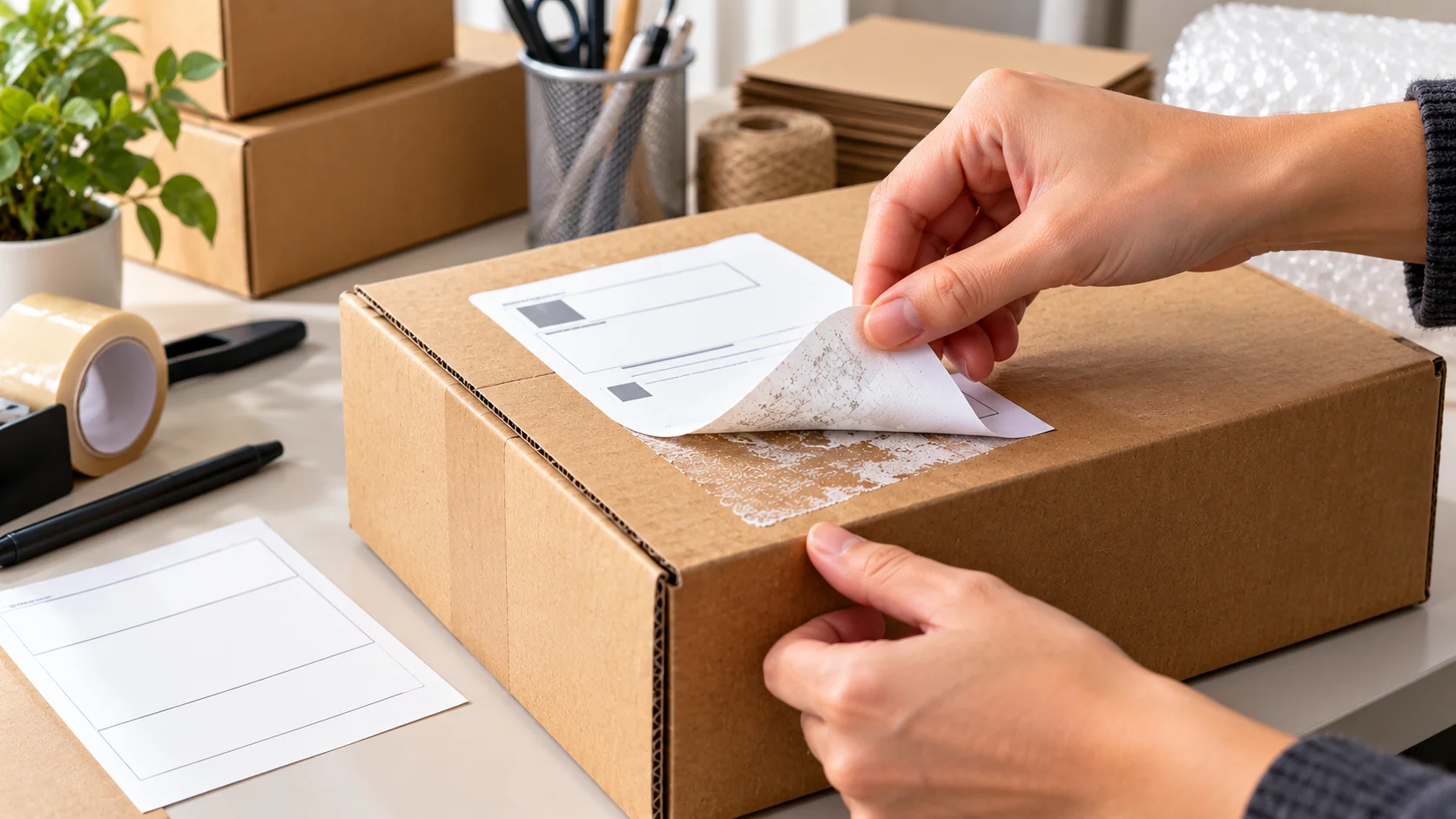
For a reusable carton, the goal is often to remove the old label without making the box look worse. If the carton is corrugated, prioritize the liner and printed surface over aggressive residue removal. When the label will be replaced, it may be better to designate a label area or use a label system designed for the intended surface.
For ecommerce workflows that rely on repeat shipping and relabeling, ecommerce-ready mailer packaging can be evaluated alongside the labeling strategy.
Barcode and Inventory Labels
Warehouse and retail labels may remain in place for longer than temporary price tags. If the package will later be reused, test the label and adhesive on the actual substrate before rolling out the same label across a large batch.
Returned Products
Returned packaging may contain several layers of labels: shipping, returns, inventory, price, and promotional labels. Removing them one at a time and evaluating the surface after each step is safer than applying a strong solvent to the entire area.
When Removing the Sticker Is Not the Best Option
Sometimes the correct decision is to stop. If removing a sticker is already lifting printed ink, tearing a paper wrap, damaging a coating, or leaving a more visible mark than the label itself, continuing can reduce the packaging’s appearance.
- Do not remove labels that contain required product or safety information unless replacement information will remain accurate and compliant.
- If the packaging is already damaged, consider whether cleaning it is worth the risk of making the damage worse.
- For premium or reusable packaging, test the removal process on a sample before treating the customer-facing package.
- If labels will be changed repeatedly, address the label/adhesive system instead of repeatedly repairing the surface.
How to Prevent Difficult Sticker Removal
The best sticker-removal problem is often the one that was prevented during label selection and packaging design.
Choose Adhesive for the Actual Application
Temporary pricing, removable promotional labels, shipping labels, permanent product identification, and reusable containers do not necessarily need the same adhesive behavior. The surface, expected label life, temperature exposure, handling, and removal requirement should all be considered.
If branded labels are part of the packaging system, reviewing custom label options for packaging can help keep the label format and the package surface in the same planning conversation.
Test Before Applying Labels in Bulk
Before producing a large run, test the actual label construction on the actual packaging finish. Check adhesion, print appearance, peeling behavior, residue after the intended dwell time, and what happens after realistic handling and storage.
Design a Label Area When Reuse Matters
For ecommerce or reusable packaging, a planned label area can make future removal and relabeling easier. This can be part of the packaging design rather than an afterthought.
Consider Printed Packaging Instead of Adding Another Label
If information is permanent and part of the brand or product presentation, incorporating it into the printed packaging can reduce the need for additional temporary stickers. The right choice depends on how often the information changes and how the packaging will be used.
When the package itself needs to be designed around the product, dimensions, finish, and labeling requirements, a broader packaging planning guide can help frame those decisions as one system rather than separate fixes.
How Better Packaging Design Can Reduce Label Problems
Sticker residue is partly a packaging-design problem when labels are repeatedly applied and removed. The material, coating, finish, box construction, label location, and intended reuse all affect the experience.
For product presentation where the box, printed surface, and internal protection need to work together, made-to-fit product packaging can connect the outer package to the product’s actual requirements.
For ecommerce shipments where labels are part of the fulfillment workflow, purpose-built mailer packaging can be considered alongside the labeling strategy.
Quick Sticker Removal Checklist
- Identify the substrate and visible finish.
- Check whether the sticker is paper, film, vinyl, or another material.
- Decide whether you need to remove the label, the residue, or both.
- Test your chosen method on a hidden area.
- Start with dry, gentle peeling.
- Use only controlled heat or moisture when the surface permits it.
- Use a plastic edge instead of a metal blade when mechanical lifting is appropriate.
- Treat adhesive residue separately.
- Clean away any remaining cleaner or oil without over-wetting the package.
- Stop if the print, coating, fibers, plastic, paint, or finish begins to change.
Frequently Asked Questions About Removing Stickers
What is the safest way to remove a sticker?
Identify the surface first, test a small hidden area, and start with slow peeling and the least aggressive compatible method. For printed or porous packaging, minimize moisture, heat, solvents, and abrasion.
How do you remove sticker adhesive?
After removing the label, treat the remaining adhesive separately. Start with a soft cloth and a mild method compatible with the surface, then escalate only after testing.
How do you remove label adhesive from cardboard?
Start with careful dry peeling and avoid soaking the cardboard. If residue remains, use the least aggressive tested method and stop if fibers, ink, or coating begin to lift.
How do you remove adhesive labels from metal?
Peel carefully, then use a soft cloth and a compatible cleaner after testing. A plastic scraper can help with thick residue; avoid aggressive scraping on painted or coated metal.
How do you remove price tag adhesive?
Lift the price tag slowly, use controlled low heat only if the surface permits it, and treat residue separately. Avoid oily or solvent-based treatments on porous or printed packaging unless compatibility has been confirmed.
How do you remove old stickers?
Work slowly because older adhesive may behave differently after long exposure to heat, sunlight, or storage conditions. Start gently and stop if the underlying surface begins changing.
How do you remove stubborn stickers?
Do not immediately use the strongest solvent or a sharp scraper. Work in stages: lift an edge, peel slowly, test controlled heat if appropriate, then treat the remaining residue.
Can I use acetone to remove stickers from packaging?
Do not treat acetone as a universal packaging cleaner. It can affect some plastics, coatings, inks, and finishes. Use it only when the material manufacturer or finish guidance confirms compatibility, and test first.
Can I use a hair dryer on a cardboard box?
Heat may help some labels release, but cardboard and printed finishes vary. If you use heat, keep it low, moving, brief, and tested on a hidden area. Do not overheat the package.
How do I remove a shipping label from a box?
Peel slowly and prioritize the corrugated liner and printed surface. Avoid soaking the box. If the carton will be reused, a label strategy designed for the actual substrate may be better than repeatedly removing old labels.
How can businesses prevent sticker residue on packaging?
Match the adhesive to the substrate and intended label life, and test the actual label construction on the actual packaging before a large production run. For reusable packaging, removable-label behavior may be important.
Conclusion: Remove the Sticker Without Sacrificing the Packaging
The best way to remove stickers is not to reach immediately for the strongest cleaner. Start by understanding the surface, then use the gentlest method that has a reasonable chance of working. Peel slowly, treat residue separately, and stop when the packaging itself begins to show damage.
For cardboard, printed paperboard, rigid-box wraps, and other finished packaging, preserving the visible surface is part of the job. For ecommerce and retail operations, repeated label removal is also a signal to review the label adhesive, application area, and packaging design before the problem reaches customers.
When packaging needs to support labeling, fulfillment, presentation, and reuse from the start, the label should be considered as part of the packaging system—not as an afterthought.