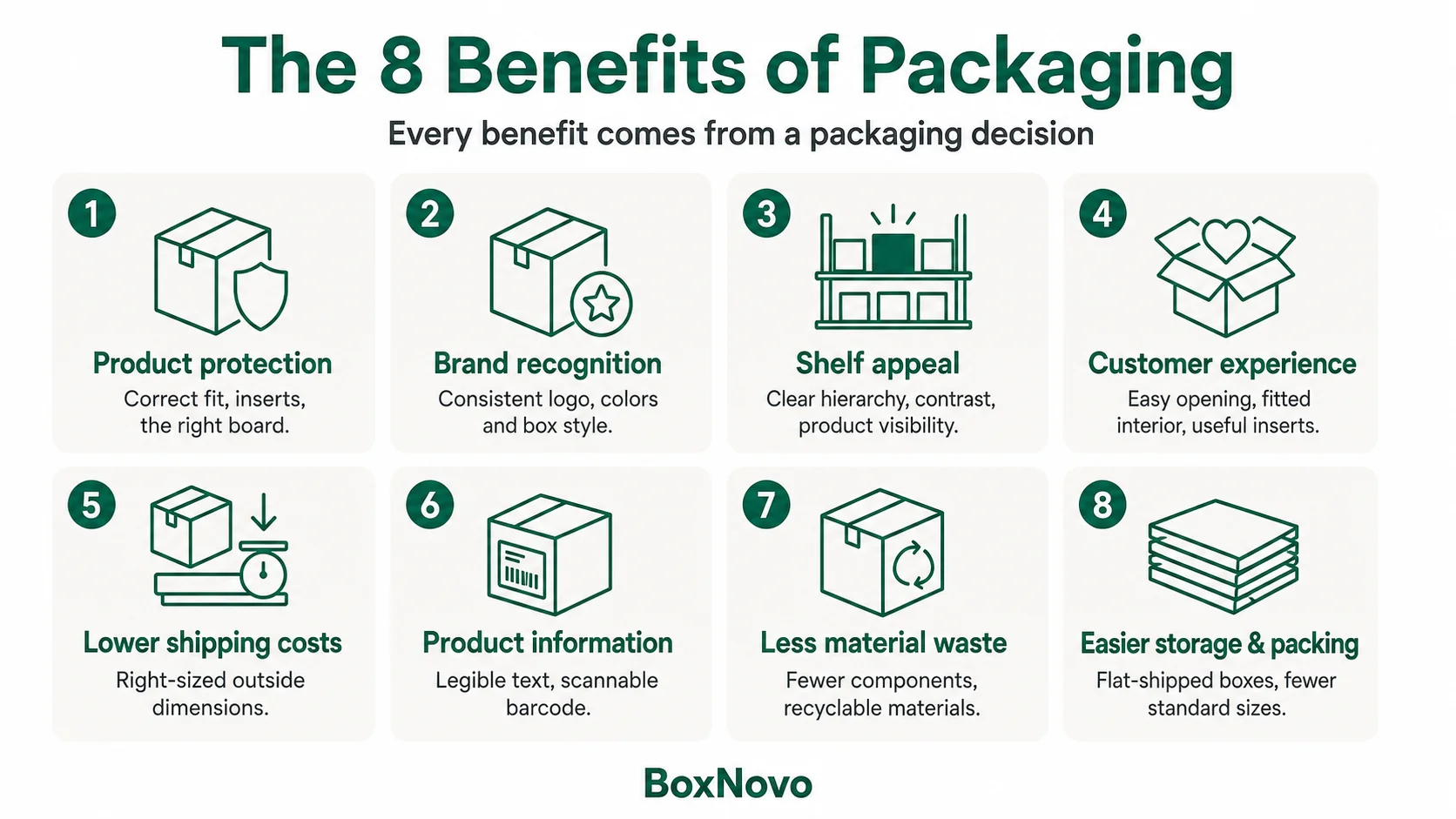
The main benefits of packaging are product protection, brand recognition, shelf appeal, a better customer experience, lower shipping costs, clear product information, less material waste and easier storage and handling. Good packaging gets a product to the customer intact, tells them whose product it is, helps it get picked over a competitor, and does all of that without wasting money on air, material or labor.
None of these benefits is automatic, though. Each one comes from a specific packaging decision: the box size, the structure, the board, the insert, the print or the finish. This guide explains each benefit, the box decision that delivers it, and how to check whether your current packaging is actually getting it. If you’re new to the topic, start with the core packaging functions.
What Are the Benefits of Packaging? (Quick Answer)
Packaging benefits fall into three groups: protecting the product, selling the product, and running the business more efficiently. The table below summarizes all eight and the decision behind each one.
| Benefit | What it does for you | The packaging decision behind it |
|---|---|---|
| 1. Product protection | Fewer broken, crushed or spoiled products, returns and replacements | Correct fit, inserts or partitions, and the right board for the journey |
| 2. Brand recognition | Customers recognize and remember your product | Consistent logo, colors, typography and structure across every product |
| 3. Shelf appeal | Your product gets noticed and picked up | Clear visual hierarchy, contrast, product visibility, display-ready structure |
| 4. Customer experience | Easy opening, a good first impression, repeat purchases | Opening mechanism, interior presentation, useful inserts |
| 5. Lower shipping costs | Smaller billable weight and less void fill | Right-sized outside dimensions |
| 6. Product information | Customers know what they bought and how to use it | Label space, legible type, scannable barcodes |
| 7. Less material waste | Less material per order and simpler recycling | Right-sizing, fewer components, recyclable materials |
| 8. Easier storage and handling | Faster packing, less warehouse space | Flat-shipped formats and a small set of standard sizes |
Which Packaging Layer Delivers Which Benefit
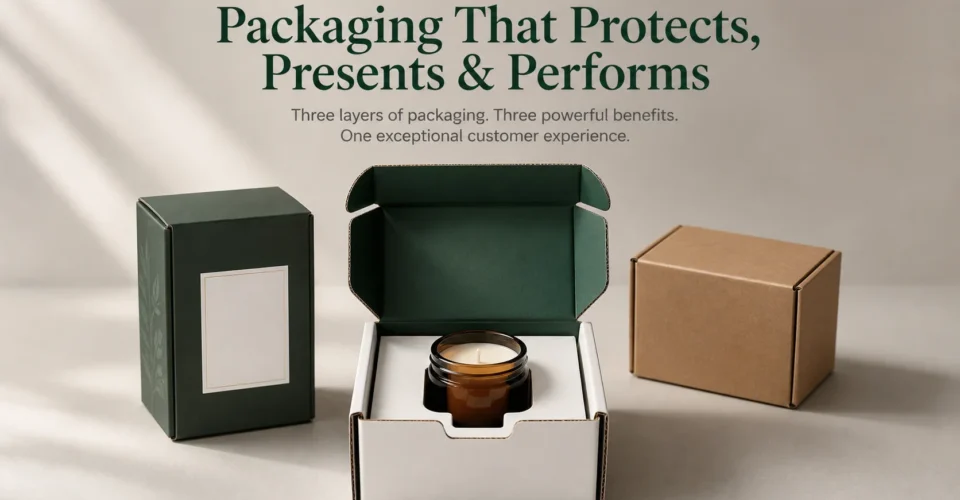
Most products travel in more than one layer of packaging. Knowing which layer does which job stops you from paying for a premium shipping box when the retail carton is what customers actually see, or from relying on a thin retail carton to survive parcel delivery.
| Packaging layer | Example | Benefits it mainly delivers |
|---|---|---|
| Primary (touches the product) | Bottle, jar, pouch, tube | Protection from contamination, product information, everyday usability |
| Secondary (presents the product) | Printed folding carton, rigid gift box, sleeve | Brand recognition, shelf appeal, information, presentation |
| Shipping or tertiary (moves the product) | Corrugated shipper, mailer box, master case | Transit protection, stacking strength, shipping cost, handling efficiency |
For direct-to-consumer brands, a branded mailer box often does the job of both the secondary and shipping layers, which is why its size and board choice matter so much. Our guide to choosing product packaging walks through how these layers fit together for real products.
1. Product Protection: Getting Products to Customers Intact
Product protection is the most basic benefit of packaging: the package keeps the product in the condition the customer paid for. Damage costs more than the product itself, because it adds a replacement, a second shipment, customer-service time and often a negative review.
What Packaging Protects Against
-
- Compression: boxes stacked in trucks, warehouses and on pallets press down on the boxes below.
-
- Drops and impacts: parcels are handled many times between your packing table and the customer’s door.
-
- Vibration: long transport can loosen closures and wear surfaces.
-
- Moisture and humidity: they weaken paper-based board and damage sensitive products.
-
- Light, air and contamination: important for food, cosmetics and supplements; the primary package usually handles this.
-
- Tampering and theft: closures, seals and plain outer boxes for valuable items reduce the risk.
How Fit, Inserts and Board Choice Change Protection
Most transit damage comes from a product that can move inside its box. A product sliding around builds up speed before it hits a wall, which is why a slightly larger box with loose filler often protects worse than a well-fitted box with an insert.
-
- Fit first: measure the product at its largest points, including caps, pumps and handles, then add a small, deliberate clearance. Our guide to measuring for box fit shows how to turn product measurements into internal box dimensions.
-
- Inserts and partitions: they hold the product in place and keep multiple items from hitting each other. Learn when to use inserts and dividers for kits and multi-bottle sets.
-
- Board choice: paperboard cartons are made for presentation, not parcel handling. For shipping, corrugated board options add stacking strength and cushioning. Thin E-flute suits lighter mailer boxes, while thicker B-flute, C-flute or double-wall board suits heavier or fragile products.
How to Check Your Packaging Is Protective Enough
Test before you order at scale. Pack a sample with the real product, then ship it to yourself or a colleague through the carrier you actually use. For a quick in-house check, drop the packed box from waist height onto its corners, edges and faces and inspect the product afterward.
Brands shipping fragile or high-value products can use formal transit tests. The International Safe Transit Association (ISTA) publishes standardized test procedures, including tests that simulate parcel delivery. To estimate how much load a corrugated box can carry, check its box stacking strength before you place a large order.
2. Branding: Making Your Product Recognizable
Packaging is often the first physical contact a customer has with your brand, especially online, where they never see the product before it arrives. Consistent packaging builds recognition: customers learn to spot your colors, logo and box shape, on a shelf or on their doorstep.
Keep Your Brand Consistent Across Every Product
Recognition comes from repetition. Use the same logo placement, color palette, typography and box style across your range, and change one controlled element, such as an accent color, to tell product variants apart. A shopper should be able to tell your lavender candle from your cedar candle without losing sight of the brand.
Print and Finish Choices That Signal Quality
-
- Digital printing suits short runs, multiple designs and frequent artwork changes.
-
- Offset printing generally suits larger runs and gives consistent, sharp color.
-
- Spot (Pantone) colors help reproduce an exact brand color across batches and materials.
-
- Finishes such as foil stamping, embossing, spot UV and soft-touch lamination add a tactile, premium feel. Use one or two deliberately rather than all of them at once.
Good branding depends on packaging structure and artwork working together, and you can preview your design on a box with a free 3D box mockup before you commit to printing.
Match Your Packaging to Your Price Point
Packaging tells customers what price to expect. Plain packaging can undersell a premium product, while overly luxurious packaging can make an everyday product look out of a shopper’s budget. Choose materials and finishes that match the price and the audience, not the most expensive option available.
3. Shelf Appeal: Helping Your Product Get Picked
Shelf appeal is how well a package catches attention and communicates its value in a few seconds of browsing. It matters because packaging influences what people buy. In a 2018 Ipsos survey of 2,002 US adults, 72% said packaging design often influences their purchase decisions, 67% said the packaging materials do, and 81% said packaging design can influence gift choices. The survey was commissioned by the Paper and Packaging Board, an industry group, so treat it as a strong signal rather than a precise measurement.
What Shoppers Notice First
-
- Visual hierarchy: the brand and product name should be readable from normal shelf distance, with supporting details below.
-
- Contrast and color: packaging that blends into its category gets skipped; packaging that ignores category cues can confuse shoppers.
-
- Product visibility: windowed product boxes let shoppers judge color, texture or quantity when seeing the product helps the sale.
-
- Shape and structure: a distinctive box shape can be as recognizable as a logo.
What Retailers Need From Your Packaging
Retail buyers decide whether your product gets shelf space, so packaging has to work for them too. It should fit the shelf or peg space it is assigned, carry a barcode that scans first time, stack or stand without tipping, and arrive undamaged. Shelf-ready formats such as counter display packaging make a product easier to merchandise. For layout, hierarchy and structure in more depth, see our guide to designing for retail shelves.
4. Customer Experience: From Opening to Reordering
Customer experience covers everything a person does with the package: carrying it, opening it, getting the product out, reading the instructions and storing or disposing of the packaging. Packaging that is frustrating to open or wasteful to throw away leaves a poor impression, even when the product inside is good.
Easy Opening, Access and Storage
Design for the moment of opening. Tuck closures, tear strips and self-locking mailers open without scissors. Products should come out of an insert without force, and anything the customer keeps, such as a cosmetics box or jewelry box, should close again neatly.
The Unboxing Experience in Ecommerce
For online orders, the shipping box is the first thing the customer touches. Branded mailer boxes with a printed interior, a fitted insert and a short thank-you or care card turn a delivery into a brand moment. If you prefer a natural look, compare kraft mailer sizes and branding options for this format.
When Extras Add Value, and When They Don’t
Tissue paper, stickers, thank-you cards and promotional inserts work when they do a job: protect a surface, explain how to use the product, invite a review or reorder, or present a gift. If an extra layer does none of these, it adds cost, packing time and waste. Customers increasingly notice over-packaging, so every component should earn its place.
5. Lower Shipping Costs Through Right-Sizing
Right-sized packaging can lower shipping costs because carriers bill many parcels by size as well as weight. This is the packaging benefit most brands underestimate, and it changed in 2026.
How Dimensional Weight Works
Dimensional (DIM) weight is a carrier’s way of charging for the space a parcel takes up. The formula is:
DIM weight (lb) = Length × Width × Height (in inches) ÷ carrier divisorEach outside dimension is rounded up to the next whole inch first, and the result is rounded up to the next whole pound. The carrier then bills the greater of the actual weight and the DIM weight. A smaller divisor produces a higher DIM weight.
| Carrier and rate type | Divisor | When it applies | Rounding |
|---|---|---|---|
| UPS daily rates | 139 | All packages | Each side up to the next whole inch; result up to the next pound |
| UPS retail rates | 166 | All packages | Same as above |
| FedEx standard rates | 139 | All packages | Each side up to the next whole inch |
| USPS Priority Mail Express, Priority Mail, Ground Advantage, Parcel Select | 139 (was 166 before July 12, 2026) | Packages larger than 1 cubic foot (1,728 cubic inches) | Each side up to the next whole inch since July 12, 2026 |
Rules current as of October 2026. Negotiated contracts can use different divisors, and carriers change these rules, so confirm with your carrier’s current service guide.
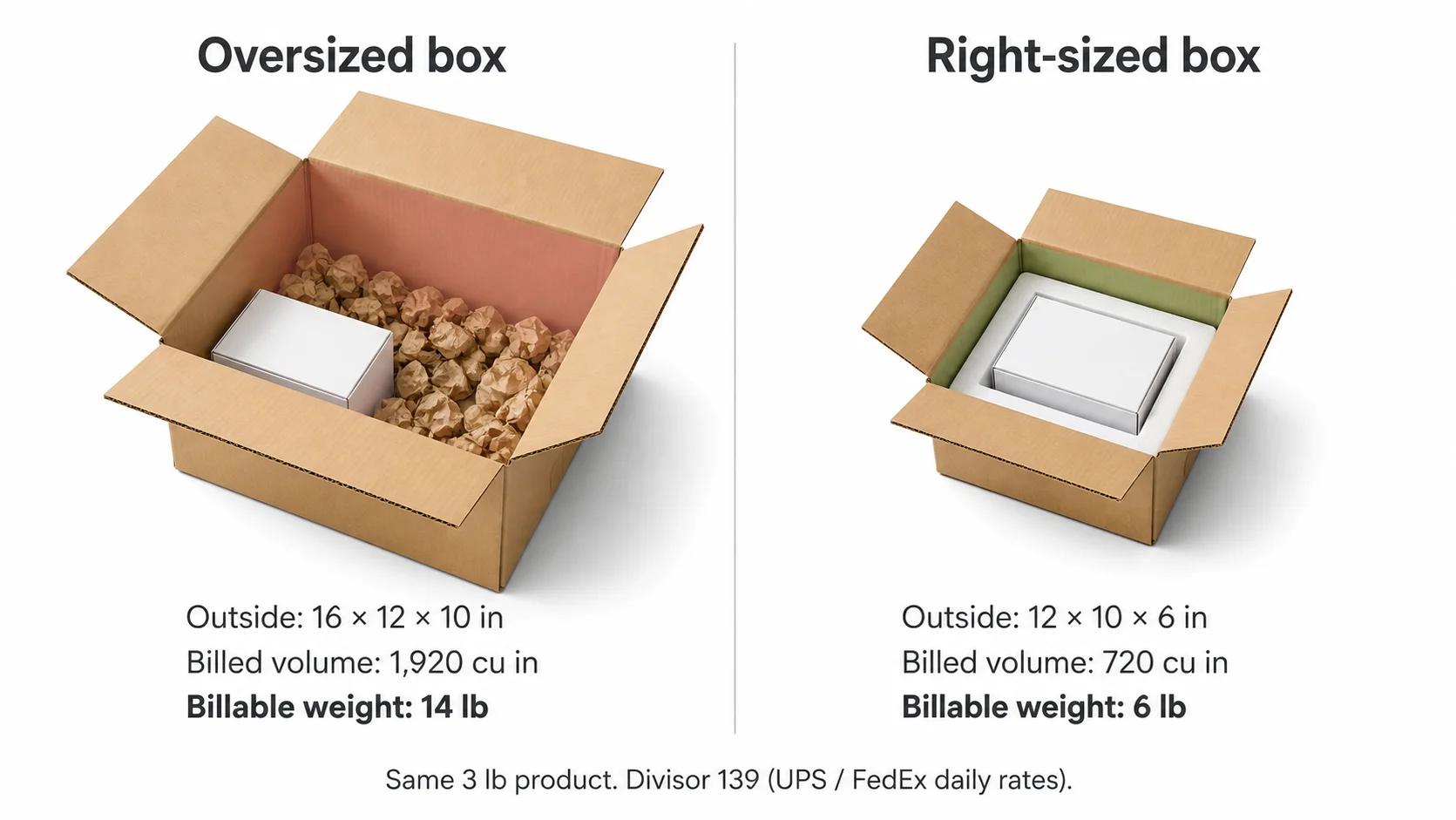
Worked Example: Oversized Box vs. Right-Sized Box
A product measuring 10 × 8 × 4 inches weighs 3 lb packed. Here is what it costs in billable weight in a common oversized stock box compared with a box sized to the product with a ½-inch insert allowance on each side.
| Oversized stock box | Right-sized box | |
|---|---|---|
| Inside size | About 15.75 × 11.75 × 9.75 in | 11 × 9 × 5 in |
| Outside size (rounded up for billing) | 16 × 12 × 10 in | 12 × 10 × 6 in |
| Billed volume | 1,920 cubic inches | 720 cubic inches |
| DIM weight (÷ 139) | 14 lb | 6 lb |
| Billable weight: UPS or FedEx daily rates | 14 lb | 6 lb |
| Billable weight: USPS | 14 lb (over 1 cubic foot) | 3 lb (actual weight; under 1 cubic foot) |
| Product’s share of the inside space | About 18% | About 65% |
Same product, same weight: the oversized box is billed at more than twice the weight with UPS or FedEx, and more than four times the weight with USPS. The right-sized box also needs far less void fill.
Right-Size Without Losing Protection
Right-sizing does not mean squeezing the product against the walls. Keep the clearance your insert or cushioning needs, then cut the empty space around it. Two practical tips:
-
- Watch the fractions. Because carriers round every side up, a box measuring 12.1 inches on the outside is billed as 13 inches. Where you can, set outside dimensions at or just under a whole inch.
-
- Check the 1 cubic foot line for USPS. A box just over 1,728 cubic inches is billed by DIM weight; one just under it is billed by actual weight.
To work out inside and outside dimensions for a new box, use our box fit calculator. To check a single box you already use, run it through the DIM weight calculator.
6. Product Information and Compliance
Packaging tells customers what the product is, how much is inside, how to use it safely and who made it. Clear information builds trust and reduces returns caused by confusion.
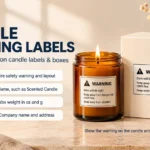
In the US, the Fair Packaging and Labeling Act requires many consumer products to show the product’s identity, the net quantity of contents and the name and place of business of the manufacturer, packer or distributor. Food, cosmetics, supplements and other regulated categories have additional rules, so check the requirements for your product type and market before you finalize artwork.
Practical tips for readable information:
-
- Keep required text at a legible size and high contrast against the background.
-
- Place barcodes on a flat panel, away from folds, seams and glue areas, with clear space around them.
-
- Keep important text inside the print safe zone so nothing is trimmed off.
-
- For products in jars, bottles or tins, follow these label layout tips to fit essential information into a small space.
7. Sustainability and Material Efficiency
Packaging is a large share of household waste. According to the US EPA, containers and packaging made up 82.2 million tons, or 28.1%, of municipal solid waste generated in 2018. The good news for paper-based boxes: the EPA reports corrugated boxes had a 96.5% recycling rate in 2018.
The most effective sustainability steps are usually practical ones:
-
- Right-size the box. Less board, less void fill and less space in every truck.
-
- Remove components that do nothing. Fewer layers mean less material and simpler recycling.
-
- Keep materials easy to separate. Paper-based boxes and inserts are simpler for customers to recycle than mixed-material packs.
-
- Do not trade protection for less material. A damaged product and its replacement shipment usually create more waste than a slightly stronger box.
Be careful with environmental claims. The FTC’s Green Guides (16 CFR Part 260) say an unqualified “recyclable” claim should only be used when recycling facilities are available to a substantial majority (60%) of consumers where the product is sold. The FTC has been reviewing the Guides since late 2022, so check the current version before printing claims. If a natural, paper-based look suits your brand, explore natural kraft board and our paper-based eco packaging.
8. Easier Storage, Handling and Packing
Packaging affects how fast your team packs orders and how much space your inventory takes. Folding cartons and mailer boxes ship flat and take up a fraction of the space of assembled boxes until you need them. Self-locking mailers can reduce taping, and fitted inserts make packing repeatable, so every order looks the same no matter who packs it.
Standardizing on a small set of box sizes also helps. Fewer sizes mean simpler reordering and less storage, as long as each size still fits its products without large gaps. Before you settle on a layout, compare material usage across your options.
Which Packaging Benefits Matter Most for Your Sales Channel?
The right priorities depend on where and how you sell. Use this table to decide where to spend your packaging budget first.
| Sales channel | Benefits that matter most | Formats that usually fit |
|---|---|---|
| Retail shelf | Shelf appeal, product information, display fit | Folding cartons, window boxes, display boxes, sleeves |
| Ecommerce | Transit protection, shipping cost, unboxing | Mailer boxes, corrugated shipping boxes, inserts |
| Subscription and gifting | Presentation, organized contents, repeat experience | Printed mailers, rigid boxes, partitions |
| Wholesale and B2B | Transit protection, stacking strength, clear labeling | Corrugated cases, partitions, labels |
Which Box Styles Deliver Which Benefits?
Every format has strengths and trade-offs. Compare them before you choose by look alone.
| Format | Strongest benefits | Trade-off to plan for |
|---|---|---|
| Tuck end cartons | Excellent print surface, shelf presentation, ships flat | Usually needs an outer shipper for parcel delivery |
| Corrugated mailer box | Protection and branded unboxing in one box | Board grade must match product weight and fragility |
| Printed shipping boxes | Transit protection and stacking strength | Plain look unless printed |
| Premium rigid boxes | High perceived value, gifting, keepsake use | More material; usually stored assembled unless collapsible |
| Window box | Lets shoppers see the product | Window reduces print area; film can complicate recycling |
| Printed box sleeves | Low-cost brand layer, easy seasonal changes | Needs an inner box or tray |
| Inserts and partitions | Movement control, organized kits, presentation | Add cost; must be sized together with the box |
| Labels | Information and branding on stock containers | Limited space; must suit the surface |
Packaging Benefits in Practice: 4 Example Scenarios
These are common situations that show how one packaging decision changes the result. They are illustrative scenarios, not client case studies.
Glass-Jar Candle Sold Online
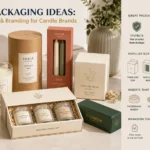
Problem: a candle shipped loose in a stock box arrives with a cracked jar. Packaging decision: a fitted insert that holds the jar away from the walls, inside a right-sized mailer or candle shipping cartons. Benefits gained: product protection, a cleaner unboxing and, often, lower billable weight. For retail shelves, fitted candle packaging does the same job with a presentation focus.
Skincare Line With Five Products
Problem: five products in mismatched cartons look like five different brands on the shelf. Packaging decision: one design system across all cartons, with a single accent color per product and the same logo position. Benefits gained: brand recognition, shelf appeal and faster reordering. Our cosmetic carton range covers serums, creams and other common formats.
Bakery Selling Pastries to Go
Problem: shoppers can’t see the product in a plain box. Packaging decision: a window box made with board or a liner suited to direct food contact. Benefits gained: shelf appeal and customer confidence. Browse our bakery box styles for cake, cupcake and pastry formats.
Jewelry Brand Focused on Gifting
Problem: a thin carton makes a premium piece feel cheap. Packaging decision: a fitted rigid gift box, or foldable rigid boxes when storage space is tight. Benefits gained: perceived value, gift appeal and a box the customer keeps.
Disadvantages and Trade-offs of Packaging
Packaging has costs as well as benefits. Knowing the trade-offs helps you get the benefits without overspending.
| Trade-off | Why it matters | How to limit it |
|---|---|---|
| Cost per unit | Custom printing and tooling have setup costs, so small runs cost more per box | Standardize sizes, order realistic quantities, sample before scaling |
| Material and waste | More layers mean more material and more for customers to throw away | Right-size, remove components that don’t protect or inform |
| Over-packaging | Excess layers frustrate customers and add packing time | Keep only what protects, informs or presents |
| Storage space | Assembled and rigid boxes take up warehouse room | Use flat-shipped or collapsible formats where possible |
| Lead times | Custom packaging takes time to produce | Plan reorders around production and delivery time |
| Claim risk | Vague green claims can mislead customers | Make specific, accurate claims that follow the FTC Green Guides |
How to Tell If Your Packaging Is Working
Measure before and after any packaging change, and compare similar products and shipping periods.
| Goal | What to measure | Good sign |
|---|---|---|
| Fewer damaged orders | Damage-related returns and replacements | Damage rate falls after the change |
| Lower shipping cost | Billable weight per order | Billable weight is close to actual weight |
| Faster packing | Average packing time per order | Packing time falls without more damage |
| Better experience | Reviews and messages that mention packaging | Fewer complaints about opening or waste |
| Stronger branding | Repeat purchases and unprompted mentions or photos | More customers recognize and share the packaging |
| Less material | Packaging material and void fill per order | Material drops while damage stays flat |
Checklist: How to Get More From Your Packaging
-
- Measure the product as packed, including caps, pumps and any inner pouch, at its largest points.
- Define the journey: retail shelf, parcel delivery, subscription, gift or a mix.
- Choose the structure that fits that journey before you design artwork.
- Set internal dimensions around the product plus insert and a small clearance.
- Choose the board and print method to match product weight, run size and brand.
- Check billable weight for your carrier using the right-size check above.
- Order a sample and test it with the real product before full production.
Mistakes That Cancel Out the Benefits
-
- Choosing a box by appearance before checking it protects the product.
-
- Using one large stock box for everything and filling the gap with void fill.
-
- Confusing internal and external dimensions when ordering.
-
- Placing barcodes or key text across folds and seams.
-
- Adding finishes, layers or extras that don’t serve a clear purpose.
-
- Printing a “recyclable” or “eco-friendly” claim you can’t support.
Frequently Asked Questions About Packaging Benefits
What are the main benefits of packaging?
The main benefits are product protection, brand recognition, shelf appeal, a better customer experience, lower shipping costs, clear product information, less material waste and easier storage and handling. Which ones matter most depends on how and where you sell.
What are the basic functions of packaging?
Packaging contains a product, protects it, communicates information about it, makes it convenient to carry and use, and promotes it. The benefits in this guide are the business results of doing those functions well.
Why is packaging important for a product?
Packaging is what gets a product to the customer in good condition and tells them what it is and who made it. For many products, it is also the main thing shoppers judge before they buy.
Does packaging really influence buying decisions?
Yes, for many shoppers. In a 2018 Ipsos survey commissioned by the Paper and Packaging Board, 72% of US adults said packaging design often influences what they buy, and 81% said it can influence gift choices.
Can a smaller box lower my shipping costs?
Often, yes. If a parcel’s dimensional weight is higher than its actual weight, a smaller box lowers the billable weight. With USPS, dimensional weight applies only to packages larger than 1 cubic foot.
Is custom packaging worth it for a small business?
It is worth it when the box fits better, protects better, cuts billable weight or builds the brand enough to cover its cost. Start with one hero product, order a sample, and compare damage, shipping cost and customer feedback before rolling it out.
What are the disadvantages of packaging?
Packaging adds cost per unit, uses material, takes up storage space and can frustrate customers when it is excessive. Right-sizing and removing unnecessary layers reduce most of these drawbacks.
Which packaging material is best for product protection?
For parcel shipping, corrugated board is usually the best choice, with the flute and wall thickness matched to the product’s weight and fragility. Paperboard cartons are mainly for presentation, and rigid boxes add strength and perceived value. Our packaging material comparison goes deeper on each option.
What is the difference between product packaging and shipping packaging?
Product packaging presents and informs, like a printed carton on a shelf. Shipping packaging protects the product in transit, like a corrugated shipper. A branded mailer box can do both jobs for online orders.
How can packaging reduce waste without risking damage?
Right-size the box, use fitted inserts instead of loose filler, and remove layers that don’t protect or inform. Then test a sample, because a damaged product creates more waste than the packaging you saved.
Choose Packaging for the Job It Has to Do
The benefits of packaging come from matching the package to the product and its journey. Start with accurate measurements, choose a structure that protects the product where it actually travels, size it to avoid paying for empty space, and then use print and finish to make the brand clear.
If you’re planning new packaging or reviewing a box that isn’t performing, BoxNovo can help you work through dimensions, structure, board, inserts and printing for your product. Request a packaging quote or read our custom packaging planning guide to plan your next step.